Bird · Baltic coast & wetlands
Haliaeetus albicilla
● IUCN: Least Concern · strictly protected
Europe’s largest eagle, with wings like flying doors. Around 1900 the white-tailed eagle had almost been wiped out in Germany. Today it circles again over the lakes, lagoons and coasts of the north-east: one of the finest comebacks in European nature.
| Habitat | Coasts, lagoons, large lakes and rivers with old forests |
| Weight | Male 4–5 kg, female up to about 7 kg |
| Active | By day; in its territory all year round |
Card I of IV
Ecological profile
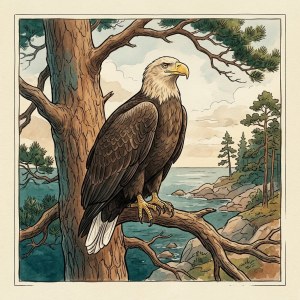
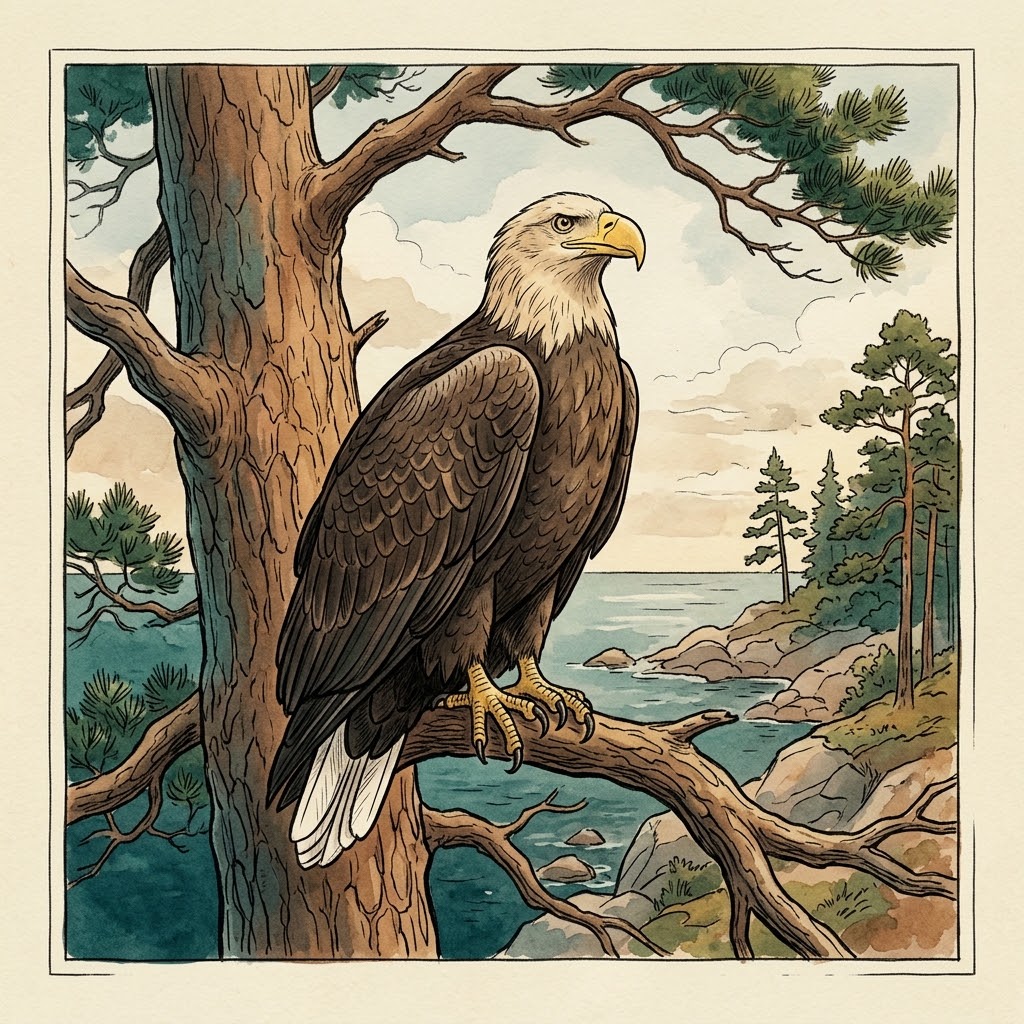
| Identification | Very large brown eagle with a pale head, huge yellow bill and a short, white, wedge-shaped tail |
| Wingspan | Up to about 2.5 metres |
| Diet | In the breeding season mainly fish; in winter more waterbirds, mammals and carrion |
In flight it holds its broad wings flat like a plank. Young white-tailed eagles are entirely dark brown. They only get the white tail and pale head once adult, at around five years old.
Where can you see them?
Difficulty: ●●●●● Easy
In the core areas of the north-east you often see one, especially in winter over open water.
| Baltic coast | The island of Usedom, with views from the bridges at Wolgast, Zecherin and Karnin |
| Inland | Müritz National Park and the Anklamer Stadtbruch |
| Tip | A boat trip on the Peene valley or the lagoons gives you good chances |
Did you know there were only 12 to 15 breeding pairs left in Germany in 1913? Thanks to protection and the ban on the pesticide DDT, that number grew back to hundreds of pairs, most of them in Mecklenburg-Western Pomerania.
Card II of IV
Behaviour & seasons
White-tailed eagles stay in their territory all year and pair for life. They breed in a huge nest high in an old tree, adding to it every year. Already in midwinter the pairs show themselves with display flights over their territory.
| December – January | Courtship; with luck you see the pairs flying together |
| Mid-February | The female lays two or three eggs, incubated for about 40 days |
| Spring – summer | The young grow up in the nest |
| Winter | Hunting waterbirds and looking for carrion; often near open water |
When is the best time to see them?
| Jan | Feb | Mar | Apr | May | Jun | Jul | Aug | Sep | Oct | Nov | Dec |
| winter · courtship | spring · breeding | summer | autumn | winter | |||||||
■ Good chance ■ Fair chance ■ Difficult
Card III of IV
Role in the ecosystem
As a top predator, the white-tailed eagle sits at the top of the food chain in wetlands. It also clears up carrion, such as dead fish and birds. That makes it an indicator: build-up of toxins in nature shows up in its health, as it once did with DDT.
Threats today: the biggest dangers now are power lines and wind turbines. In winter, when food is scarce, white-tailed eagles also feed on carrion along railways and roads, where they are sometimes hit. In the breeding season, peace and distance around the nests are important.
Card IV of IV
Stories & culture
From ‘pest’ to protected
Around 1850 Germany began persecuting birds seen as ‘harmful’, and the white-tailed eagle was one of the victims. By around 1900 it had been all but wiped out in Germany and much of Europe. Eagles have been protected in Germany since 1934. In Mecklenburg-Western Pomerania, volunteers have guarded the nests since the 1950s. Thanks to them, the white-tailed eagle is now a symbol of how nature conservation can work.
Frequently asked questions
Questions about the white-tailed eagle
How big is a white-tailed eagle?
With a wingspan of up to about 2.5 metres it is Europe’s largest eagle. Females are larger and heavier than males.
Where can you see white-tailed eagles in Germany?
Mainly in Mecklenburg-Western Pomerania, for example on and around Usedom, in Müritz National Park and the Anklamer Stadtbruch.
Does the white-tailed eagle migrate in winter?
No, most adults stay in their territory all year. In winter they are actually easy to see over open water.
Why does a young white-tailed eagle not have a white tail?
Young white-tailed eagles are dark brown. They only get the white tail and pale head once adult, at around five years old.
Habitat · Germany