Mammal · Veluwe
Sus scrofa
● IUCN: Least Concern
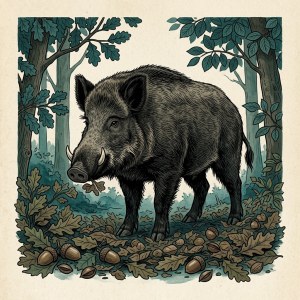
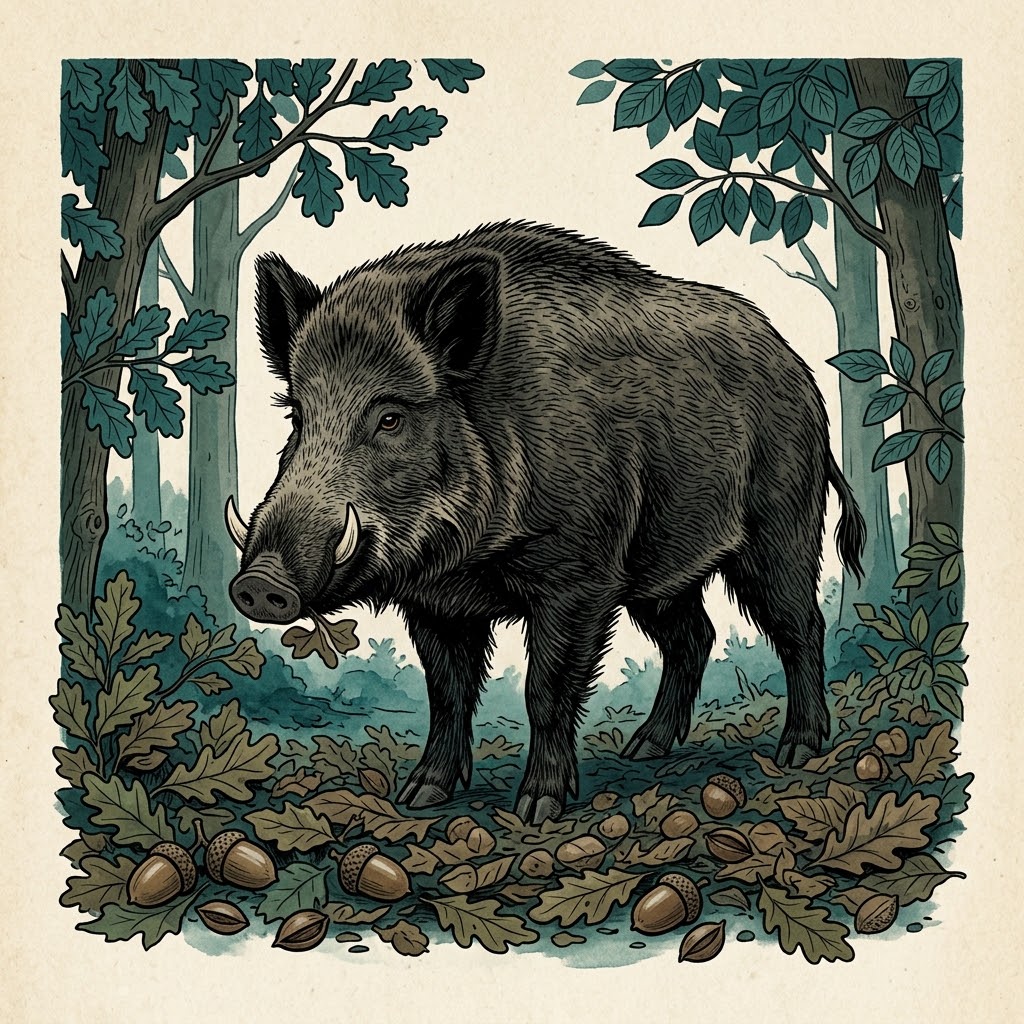
A clever, powerful omnivore that roots up the forest floor with its snout. Where wild boar have been foraging, you see it immediately: churned-up soil, as if someone had been at it with a spade.
| Habitat | Deciduous and mixed forest |
| Weight | Sow 50–100 kg, boar up to approx. 150 kg |
| Active | Mainly in the evening and at night |
Card I of IV
Ecological profile
| Habitat | Oak and beech forests mixed with clearings and wet patches |
| Identification | Bristly grey-brown to black coat, long snout, males with prominent tusks |
| Diet | Omnivore: acorns, beechnuts, roots, tubers, worms, grubs and sometimes carrion |
| Length | 1.2 to 1.8 metres |
A male is called a boar, a female a sow, and the young are piglets. The male’s tusks keep growing throughout his life and sharpen themselves against the teeth in the upper jaw.
Where can you see them?
| Veluwe | De Hoge Veluwe National Park and the wildlife areas around the Kroondomein |
| Limburg | De Meinweg National Park |
| Tip | Around sunset at a wildlife hide; they often come to open spots with acorns |
Did you know wild boar love a mud bath? It cools them down and the layer of mud protects against insects and parasites. Afterwards they rub against a tree, which gets a smooth, polished spot.
Card II of IV
Behaviour & seasons
Wild boar live in family groups called sounders, made up of a few sows with their young. Adult males live alone for most of the year and join the sounders mainly in winter, during the mating season.
Wild boar are naturally shy. If you meet them, keep a calm distance and never walk between a sow and her piglets. Never feed them: fed boar lose their shyness and come closer to people.
| November – January | Mating season; males join the sounders |
| March – May | The striped piglets are born |
| Summer | The piglets’ stripes slowly fade |
| Autumn | Fattening up on acorns and beechnuts for winter |
Card III of IV
From wild to plate
Wild boar meat is darker, firmer and leaner than pork, with a deep, slightly nutty flavour. That flavour comes partly from what the animal eats: in autumn, mostly acorns and beechnuts.
Important: wild boar must always be cooked through. Wild boar can carry the parasite Trichinella. Meat sold officially is inspected for it, but even then: never eat it pink or raw.
| Loin and fillet | Tender; roast and cook through |
| Leg | For a roast from the oven |
| Shoulder, neck and belly | Ideal for stews, ragout and sausages |
These are general seasonal and preparation guidelines, not official hunting seasons or a food safety guarantee. Check local regulations and reliable sources.
Card IV of IV
Recipe & tradition
Wild boar stew with dark beer and apple
| Meat | Wild boar shoulder or neck in large chunks |
| Flavourings | Dark beer, onion, bay leaf, cloves, a slice of spiced gingerbread spread with mustard, and pieces of tart apple |
| Method | Brown, then simmer gently for 2.5 to 3 hours until fully cooked and tender |
| Serve with | Mashed potatoes, red cabbage or chips |
In the Ardennes and Limburg, wild boar has been part of the regional cuisine for centuries. The stew with dark beer and spiced gingerbread is a cousin of Flemish carbonnade. The gingerbread thickens the sauce and adds a soft, spiced sweetness that suits the robust meat. The long cooking time also ensures the meat is thoroughly cooked.
These are general seasonal and preparation guidelines, not official hunting seasons or a food safety guarantee. Check local regulations and reliable sources.
Frequently asked questions
Questions about the wild boar
Where can you see wild boar in the Netherlands?
Mainly on the Veluwe, for example in De Hoge Veluwe National Park, and in De Meinweg National Park in Limburg. Your best chance is around sunset.
Are wild boar dangerous?
Normally they are shy and avoid people. Always keep your distance, especially from a sow with piglets in spring, and never feed them.
When are wild boar piglets born?
Usually between March and May. The piglets have pale lengthwise stripes that fade over the summer.
What do wild boar eat?
Almost anything. In autumn mostly acorns and beechnuts, plus roots, tubers, worms, grubs and sometimes carrion.
Does wild boar meat need to be cooked through?
Yes, always. Wild boar can carry the parasite Trichinella. Cook the meat all the way through and never eat it pink or raw.
Habitat · The Netherlands