Mammal · Veluwe
Meles meles
● IUCN: Least Concern · protected in NL
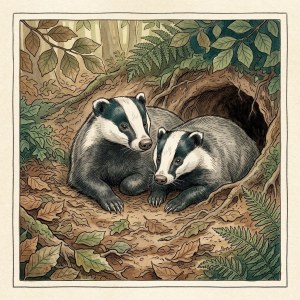
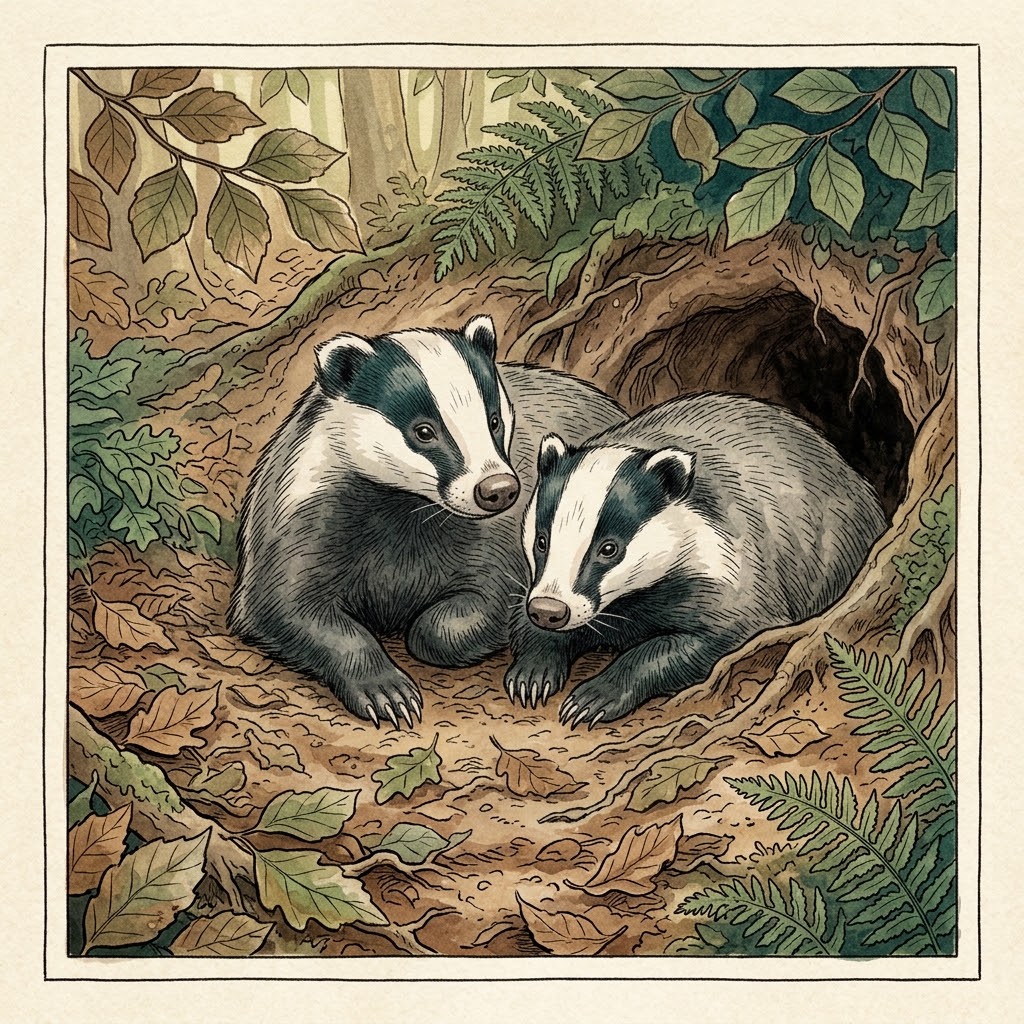
A sturdy digger with a black and white striped face. The badger lives in an underground sett that is sometimes inhabited and extended by generations of badgers for centuries.
| Habitat | Forest edges, hedgerows and small-scale farmland |
| Weight | 10–15 kg |
| Active | At night |
Card I of IV
Ecological profile
| Habitat | Varied landscape with woodland for the sett and grassland for foraging |
| Identification | White head with two broad black stripes over the eyes, grey back, short legs with strong digging claws |
| Diet | Mainly earthworms, plus grubs, berries, fruit, maize and acorns |
| Length | 65–90 cm, including a short tail |
Badgers live in family groups in a sett: a system of tunnels and chambers with several entrances. They are remarkably tidy. They regularly replace their bedding of grass and leaves and use fixed latrine pits outside the sett.
Where can you see them?
| East and south | The Veluwe, Achterhoek, Twente, North Brabant and Limburg |
| Signs | Sett entrances with large spoil heaps, well-worn paths and latrine pits |
| Tip | Join an organised badger walk at dusk; waiting at a sett on your own disturbs the animals |
Did you know a badger can eat hundreds of earthworms in a single night? After a rain shower you often see badgers on grassland, where the worms then come to the surface.
Card II of IV
Behaviour & seasons
The badger does not truly hibernate, but in cold spells it is much less active and lives off its fat reserves. That is why it eats its fill in autumn.
Like roe deer, badgers have delayed implantation: they often mate in spring or summer, but the cubs are only born in late winter, deep inside the sett.
| February – March | Two to four cubs are born in the sett |
| April – May | The cubs come above ground for the first time |
| Summer | Very active; the cubs learn to forage |
| Autumn – winter | Fattening up, then quieter in the sett |
Card III of IV
Role in the ecosystem
By digging, the badger mixes the soil and creates space for other animals: unused parts of a sett are often taken over by foxes and rabbits. By digging up grubs and wasp nests, it also keeps their numbers in check.
Around 1980 only about 1,200 badgers were left in the Netherlands. Thanks to protection and measures such as badger tunnels under roads, the badger has made a clear comeback.
| Soil engineer | Digs and turns over the ground |
| Shelter | Old parts of setts serve as refuges for other animals |
| Biggest threat | Traffic: many badgers die on the roads |
| Protection | Legally protected; badger tunnels and fencing along roads |
Card IV of IV
Stories & culture
Grimbert, the loyal nephew
In the medieval Dutch tale Van den vos Reynaerde (Reynard the Fox), Grimbert is the badger: the nephew of Reynard the fox. While all the other animals accuse the cunning fox at the court of King Noble the lion, Grimbert keeps defending him. That made the badger a symbol of loyalty and family in Dutch literature.
Shaving brushes and badger tunnels
Badger hair was once used for shaving brushes and paintbrushes. Today the badger is more a symbol of nature conservation: the Netherlands was one of the first countries with special tunnels under roads so that badgers can cross safely.
Frequently asked questions
Questions about the badger
Where can you see badgers in the Netherlands?
Mainly in the east and south: on the Veluwe, in the Achterhoek, Twente, North Brabant and Limburg. Because badgers are active at night, your best chance is an organised excursion.
What does a badger eat?
Mainly earthworms. It also eats grubs, berries, fruit, maize and acorns.
Does a badger hibernate?
Not truly. In cold periods it is much less active and lives off its fat reserves.
Is the badger protected?
Yes, the badger is legally protected in the Netherlands. Globally it is listed as Least Concern on the IUCN Red List.
Habitat · The Netherlands