Mammal · Ardennes
Felis silvestris
● IUCN: Least Concern · strictly protected
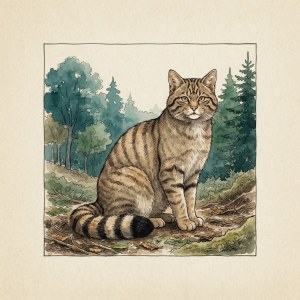
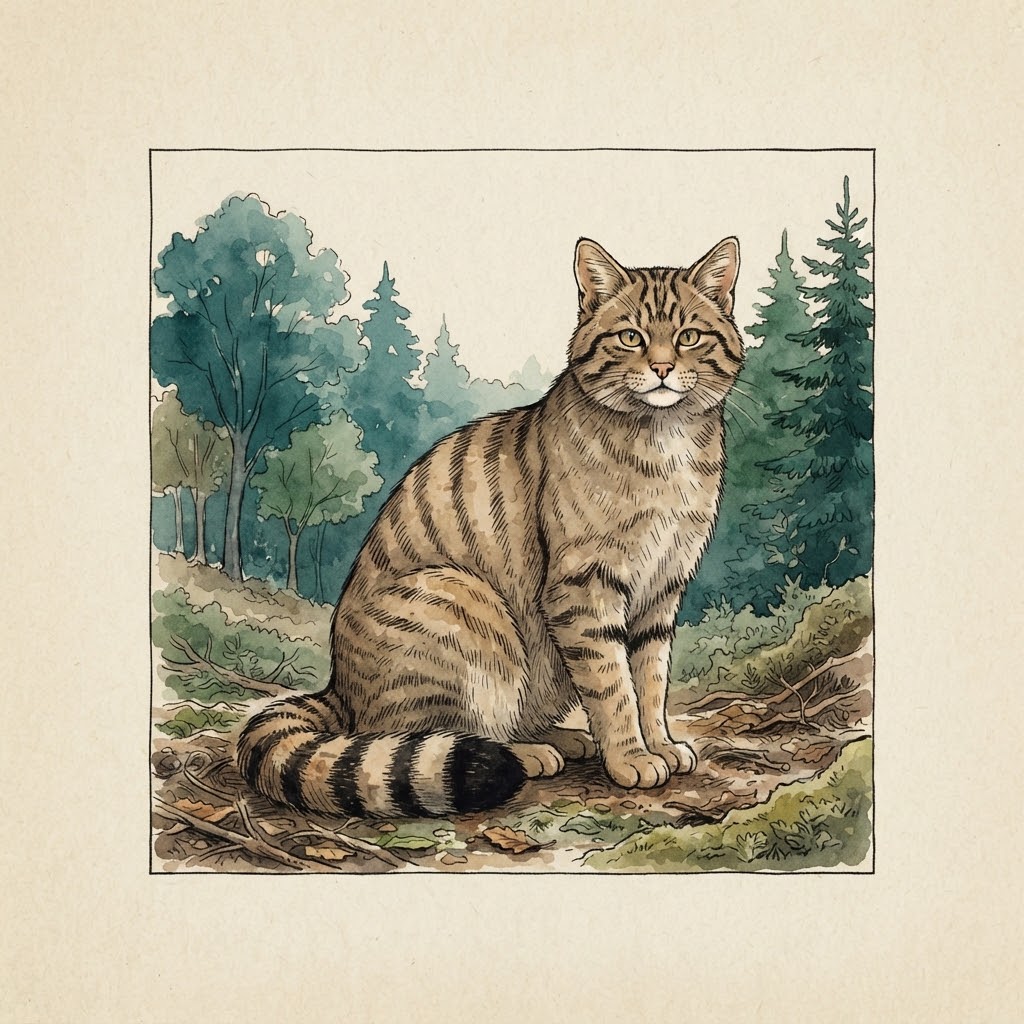
It looks like a sturdy striped house cat, but it is a truly wild animal that avoids people. The wildcat lives hidden in the forests of the Ardennes and is one of the shyest mammals of the Low Countries.
| Habitat | Large deciduous forests with clearings and forest edges |
| Weight | 3–7 kg |
| Active | At dusk and at night |
Card I of IV
Ecological profile
| Identification | Grey-brown, faintly striped coat; short, thick tail with a blunt black tip and three to five black rings |
| Difference from a house cat | Stockier, with a thicker tail; the dark stripe along the back stops at the base of the tail |
| Diet | Mainly mice and voles, sometimes birds and young rabbits |
Where can you find them?
| Belgium | The forests of the Ardennes and the Gaume |
| Netherlands | Recently also in South Limburg, in small numbers |
| Tip | Seeing one yourself is rare; camera traps run by nature organisations give the best footage |
Did you know our house cat does not descend from the European wildcat? House cats descend from the African wildcat of the Middle East.
Card II of IV
Behaviour & seasons
The wildcat is a loner with a large territory. It hunts mainly along forest edges and in clearings, where the mice are. By day it rests in a hollow tree, a rock crevice or an old fox den.
| January – March | Mating season |
| April – May | Two to four kittens in a hidden den |
| Autumn | Young leave and look for a territory of their own |
Card III of IV
Role in the ecosystem
As a mouse hunter, the wildcat keeps rodent numbers in the forest in check. Its biggest threat is not hunting but the house cat: wildcats interbreed with feral house cats, which can slowly make the true wildcat disappear. Traffic also kills many animals.
Want to help? Do you live in or near the Ardennes? Have your own cat neutered or spayed. That prevents house cats from interbreeding with wildcats.
Card IV of IV
Stories & culture
For centuries the wildcat stood for independence and fighting spirit. The Scottish Clan Chattan bears it in its coat of arms, with the motto Touch not the cat bot a glove: do not touch the cat without a glove. In the Ardennes it was long seen as vermin and hunted. Only since it has been protected has it had the chance to return.
Frequently asked questions
Questions about the wildcat
How can you tell a wildcat from a house cat?
The wildcat is stockier, with a thick tail ending in a blunt black tip and a few distinct black rings. The dark stripe along its back stops at the base of the tail.
Is the wildcat found in the Netherlands?
Yes, for a few years now in small numbers in South Limburg, coming from the Ardennes and the Eifel.
Is the wildcat protected?
Yes, the wildcat is strictly protected in Belgium and the Netherlands. Globally it is listed as Least Concern on the IUCN Red List.
Habitat · Belgium