Bird · Ardennes
Bubo bubo
● IUCN: Least Concern · protected
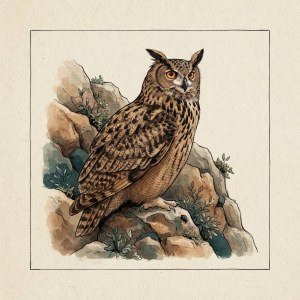
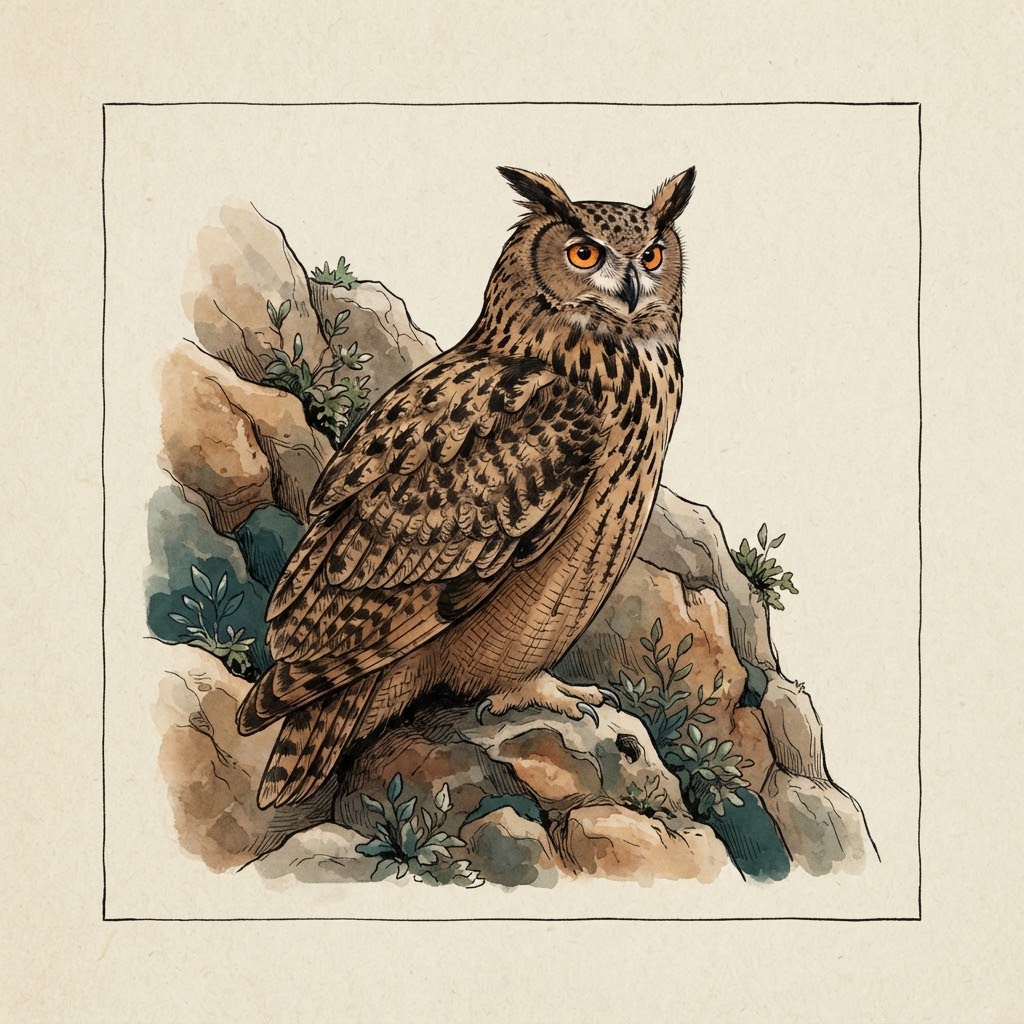
With a wingspan of almost two metres, the eagle owl is the largest owl in Europe. Orange eyes, long ear tufts and a deep, far-carrying ‘oo-hoo’ that gave it its Dutch name, oehoe.
| Habitat | Rock faces, quarries and wooded river valleys |
| Wingspan | 1.5–1.8 metres |
| Active | At dusk and at night |
Card I of IV
Ecological profile
| Identification | Very large, brown mottled plumage, orange eyes and long ear tufts |
| Diet | Rats, hedgehogs, rabbits, crows, waterbirds and sometimes other owls |
| Nest | No real nest; the eggs lie on a ledge in a rock face or quarry |
Where can you find them?
| Belgium | River valleys and quarries of the Ardennes, such as along the Meuse and the Ourthe |
| Netherlands | South Limburg, and scattered elsewhere in the country |
| Tip | Listen on a quiet evening in late winter for the deep calling |
Did you know an eagle owl’s ear tufts are not ears at all? They are feathers that help with camouflage and communication. The real ears are hidden on the sides of the head.
Card II of IV
Behaviour & seasons
Eagle owls are faithful to their partner and their breeding site: a pair often uses the same rock ledge for years. They hunt from a lookout and fly silently. By day they sit motionless and well camouflaged against the rock.
| January – February | Courtship calls on quiet evenings |
| March – April | Two to four eggs on a rock ledge |
| Summer | Young leave the breeding site even before they can fly well |
Card III of IV
Role in the ecosystem
As the top predator of the night, the eagle owl sits at the top of the food chain. It catches many rats and crows, and even other birds of prey and owls, which helps keep the whole system in balance. In the twentieth century it had disappeared from Belgium and the Netherlands through persecution. Since being protected it has returned, and abandoned quarries turned out to be ideal breeding sites.
Card IV of IV
Stories & culture
The Dutch name oehoe imitates its call; in German it is called Uhu for the same reason. Its deep voice in dark forests made it a bird of ill omen or a messenger from another world in folk tales. That it now nests in old quarries cut by people makes it a fine example of how industrial heritage can become nature again.
Frequently asked questions
Questions about the eagle owl
How big is an eagle owl?
The eagle owl is the largest owl in Europe, with a wingspan of 1.5 to 1.8 metres.
Where does the eagle owl breed?
On ledges in rock faces and quarries, especially in the Ardennes and South Limburg. It does not build a real nest.
What does an eagle owl eat?
Rats, hedgehogs, rabbits, crows and waterbirds, and sometimes even other owls and birds of prey.
Habitat · Belgium