Mammal · Ardennes
Rhinolophus ferrumequinum
● IUCN: Least Concern · strictly protected
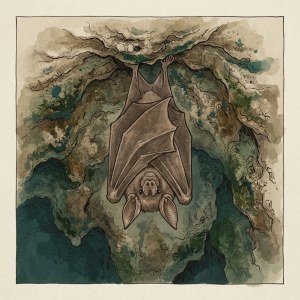
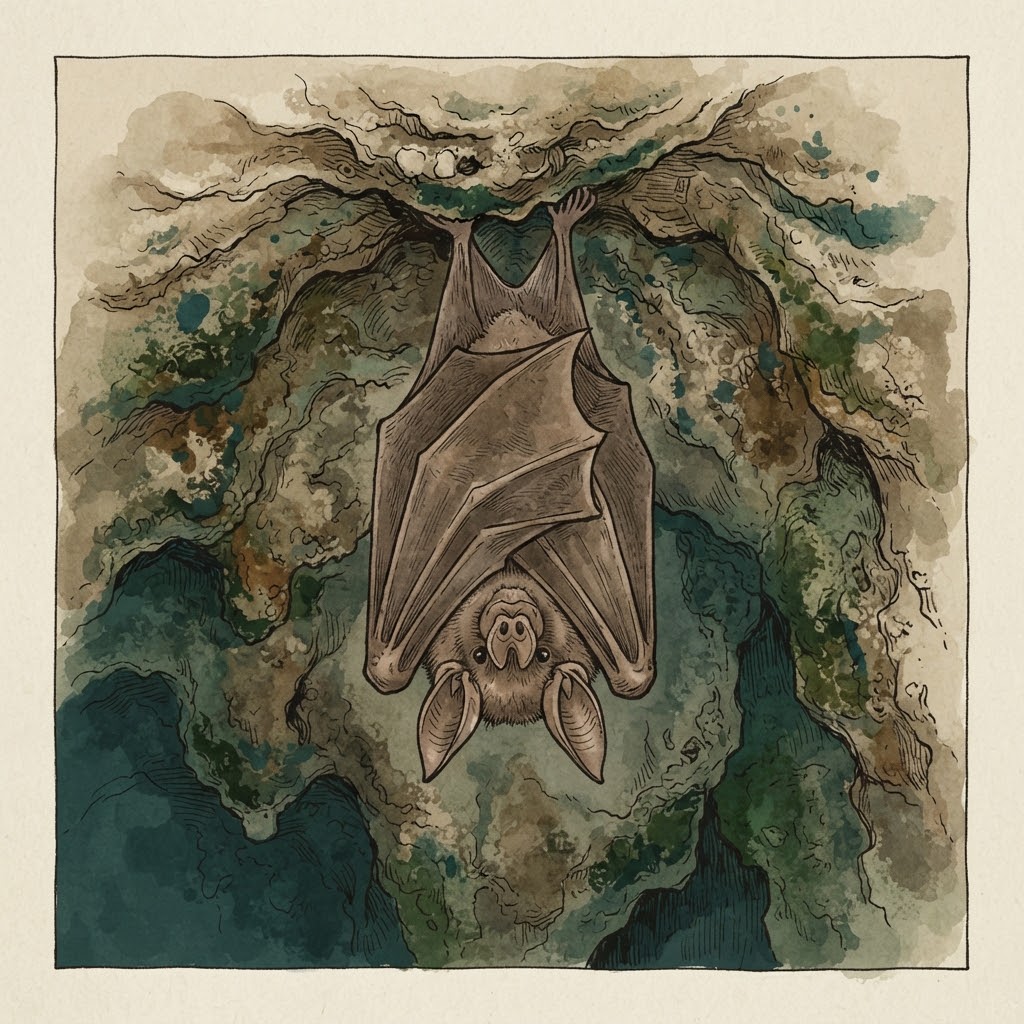
It hangs freely from the ceiling of a cave, completely wrapped in its wings like a small brown parcel. The greater horseshoe bat owes its name to the strange horseshoe-shaped flap of skin around its nose, through which it sends out its calls.
| Habitat | Varied countryside with meadows, hedgerows and forest edges; caves and quarries for hibernation |
| Wingspan | About 33–40 cm |
| Weight | About 17–34 grams |
Card I of IV
Ecological profile
| Identification | Brown-grey fur, a horseshoe-shaped nose leaf and large pointed ears; hangs freely, wrapped in its wings |
| Special | The largest horseshoe bat in north-west Europe; emits its sonar through the nose instead of the mouth |
| Diet | Large insects such as cockchafers, dung beetles and moths |
Where can you find them?
| Belgium | Rare, mainly in Wallonia, hibernating in caves and quarries |
| Netherlands | Very rare; occasionally in the marl quarries of South Limburg |
| Tip | Never go into a cave yourself to look for bats; in winter every disturbance costs them precious energy |
Did you know a greater horseshoe bat can live for more than 30 years? That is very old for such a small mammal.
Card II of IV
Behaviour & seasons
The greater horseshoe bat hunts low along hedgerows, forest edges and over meadows with grazing cattle. Sometimes it hangs from a branch and waits for an insect to fly past, then catches it in a short flight. In summer the females live together in maternity colonies in warm attics or churches; in winter they hibernate in caves and quarries.
| October – April | Hibernation in caves, quarries and old mines |
| May | Females gather in maternity colonies |
| June – July | One young per female |
| Autumn | Mating season and building up fat reserves for winter |
Card III of IV
Role in the ecosystem
As an insect eater, the greater horseshoe bat clears up large numbers of beetles and moths every night. It depends heavily on small-scale countryside: it uses hedgerows and tree lines as ‘roads’ to navigate, and meadows with grazing cattle supply dung beetles. The loss of hedgerows, of undisturbed winter roosts and of insects has made it rare in the Low Countries.
What helps? Many caves with bats are closed in winter with a special gate: bats can get through, people cannot. Always respect such closures.
Card IV of IV
Stories & culture
Bats have never had an easy time in European stories: they were linked to witches, devils and, since Dracula, vampires. European bats, however, eat only insects. Elsewhere, for example in China, the bat actually stands for good fortune: the word for bat there sounds like the word for luck.
Frequently asked questions
Questions about the greater horseshoe bat
Why is it called a horseshoe bat?
Because of the horseshoe-shaped flap of skin around its nose. It uses it to focus the sound waves it relies on to navigate and find prey.
Where does the greater horseshoe bat hibernate?
In cool, damp and undisturbed places such as caves, limestone quarries and old mines.
Is the greater horseshoe bat protected?
Yes, all bats are strictly protected in Belgium and the Netherlands. Globally the greater horseshoe bat is listed as Least Concern on the IUCN Red List, but it is rare in the Low Countries.
Habitat · Belgium