Mammal · Ardennes
Martes martes
● IUCN: Least Concern · protected
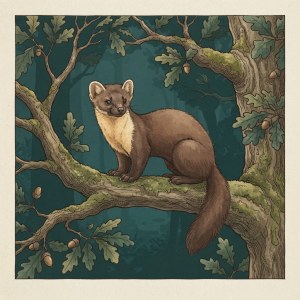
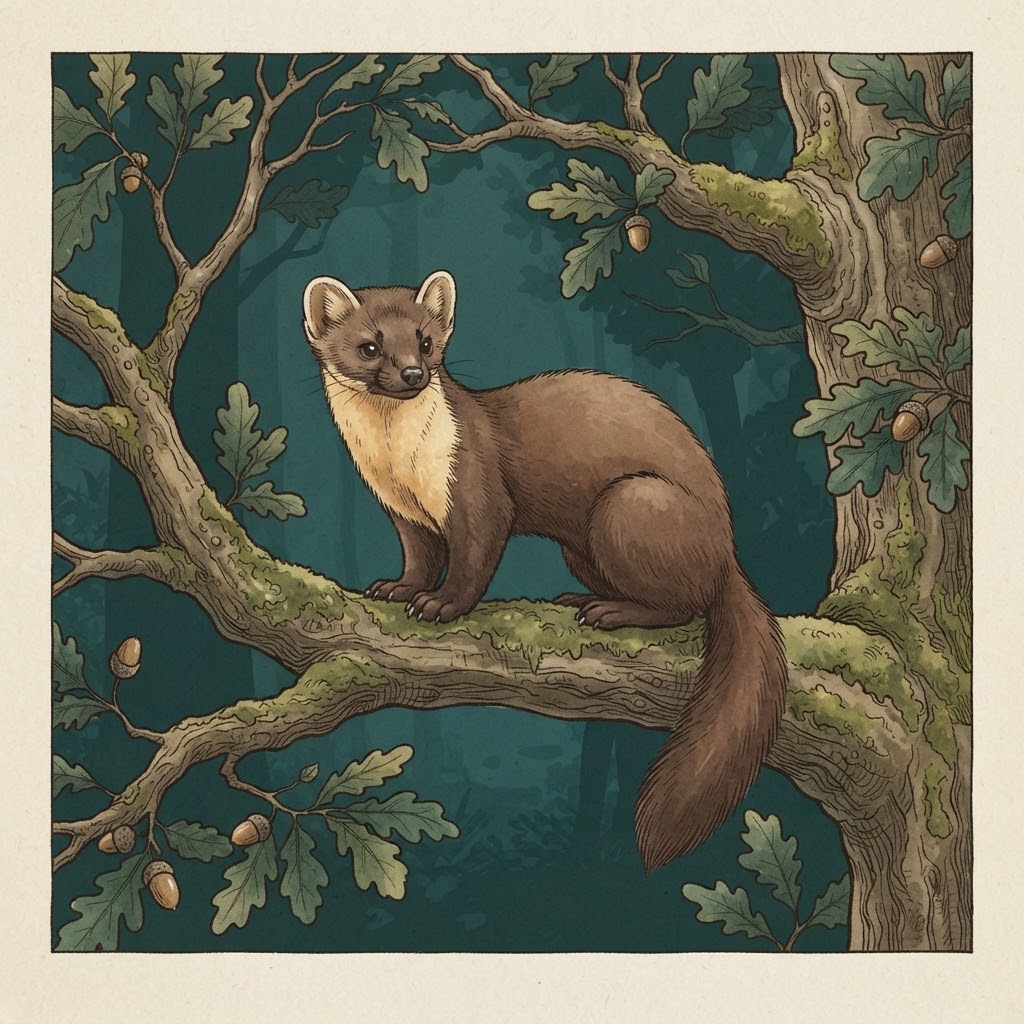
A chocolate-brown acrobat with a creamy yellow bib that leaps effortlessly from branch to branch. The pine marten is the climbing champion of the Ardennes forests and lives mostly high up in the trees.
| Habitat | Old deciduous and mixed forests with hollow trees |
| Length | 40–55 cm, plus a 20–28 cm tail |
| Weight | About 1–2 kg |
Card I of IV
Ecological profile
| Identification | Slender, chocolate-brown, with a large creamy yellow throat patch, rounded pale-edged ears and a bushy tail |
| Difference from stone marten | The stone marten has a white, often forked throat patch and likes to live near houses; the pine marten stays in the forest |
| Diet | Mice, squirrels, birds and eggs, but also berries, fruit and honey |
Where can you find them?
| Belgium | Mainly in the large forests of the Ardennes |
| Netherlands | On the Veluwe and in other large forest areas, among others |
| Tip | If you spot one, it is usually at dusk, high in a tree crown |
Did you know the shape of the yellow throat patch is different on every pine marten? Researchers even use it to recognise individual animals on camera-trap footage.
Card II of IV
Behaviour & seasons
The pine marten is a loner with a large territory, active mainly at dusk and at night. By day it sleeps in a tree hollow, often an old black woodpecker nest, or in a squirrel’s drey. Its pregnancy is unusual: after mating in summer, the embryo only starts to develop months later.
| July – August | Mating season |
| March – April | Two to five young in a tree hollow |
| Summer | Young learn to climb and hunt |
| Autumn | Plenty of berries and fruit on the menu; young look for a territory of their own |
Card III of IV
Role in the ecosystem
As a predator the pine marten keeps mice and other small animals in check, and by eating berries it spreads seeds through the forest. It needs old forest with hollow trees. In Britain and Ireland, studies found that where the pine marten returns, the non-native grey squirrel declines, which helps the native red squirrel.
What helps? Leaving old and dead trees standing. Hollow trunks are essential to the pine marten as places to sleep and raise young.
Card IV of IV
Stories & culture
For centuries the pine marten was prized for its soft, glossy fur, which was fashionable among the nobility and clergy in the Middle Ages. Because of that demand and persecution as a ‘robber’, it became rare in much of the Low Countries. Since it was protected and forests have grown older, it has been making a quiet comeback.
Frequently asked questions
Questions about the pine marten
What is the difference between a pine marten and a stone marten?
The pine marten has a creamy yellow throat patch and lives in the forest. The stone marten has a white, often forked throat patch and likes to live close to people.
What does a pine marten eat?
Mice, squirrels, birds and eggs, but also plenty of berries, fruit and sometimes honey.
Is the pine marten protected?
Yes, the pine marten is protected in Belgium and the Netherlands. Globally it is listed as Least Concern on the IUCN Red List.
Habitat · Belgium