Mammal · Alps
Rupicapra rupicapra
● IUCN: Least Concern
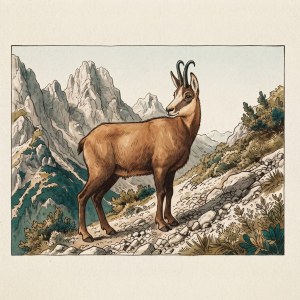
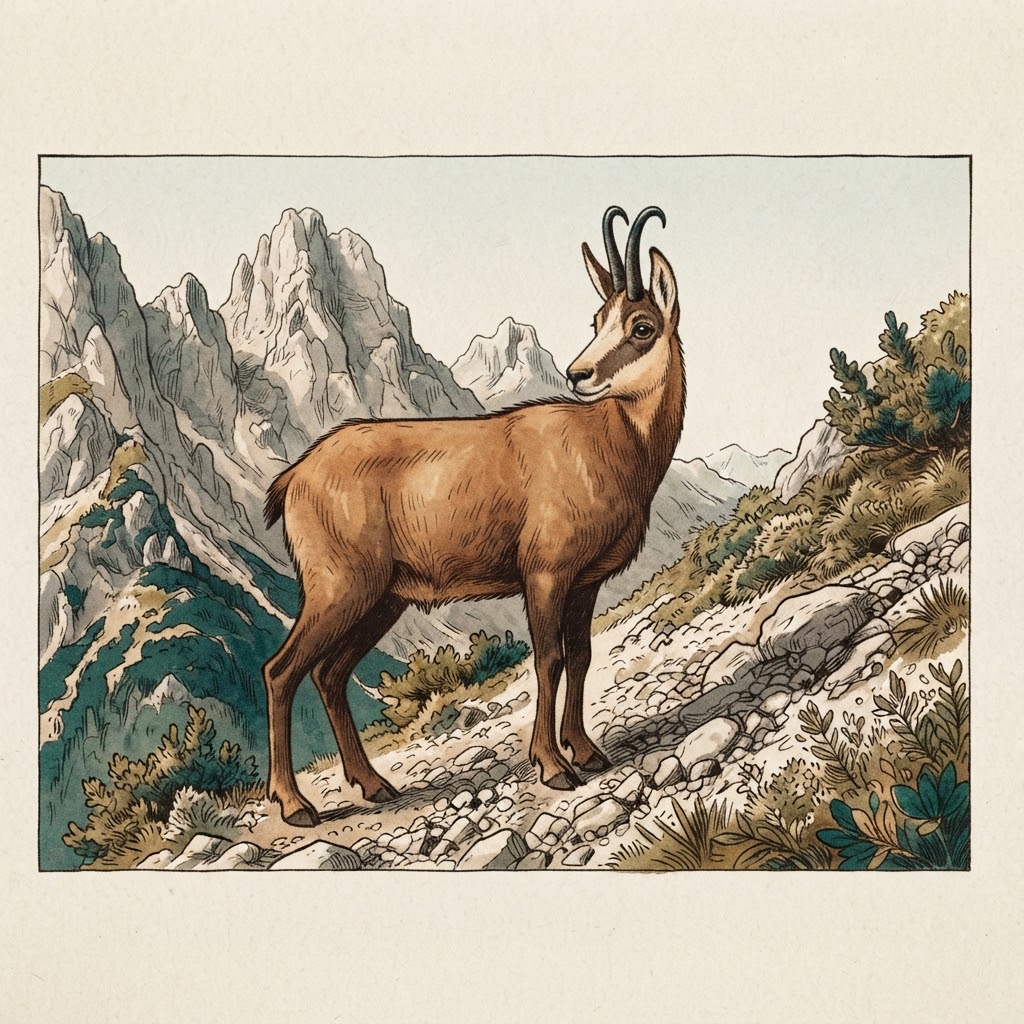
High in the Bavarian Alps, the chamois leaps effortlessly across narrow ledges and steep rock faces. A goat-like mountain dweller with short, backward-hooked horns and black-and-white markings on its head.
| Habitat | Rocky mountain slopes, alpine meadows and mountain forests |
| Weight | 25–50 kg |
| Active | During the day |
Card I of IV
Ecological profile
| Identification | Light brown in summer, almost black in winter; white head with a black stripe across the eyes; short hooked horns in both sexes |
| Diet | Grasses, herbs, buds and in winter also needles and lichens |
| Climber | Hooves with hard edges and soft soles that grip the rock |
Where can you find them?
| Germany | The Bavarian Alps, such as Berchtesgaden National Park and the Karwendel |
| Elsewhere | Also in the Black Forest, where a small population lives |
| Tip | Bring binoculars and scan the rocky slopes above the tree line early in the morning |
Card II of IV
Behaviour & seasons
Females and young live in herds; older males are often solitary. In summer chamois move high into the mountains; in winter they descend to the shelter of the mountain forest. When in danger they give a shrill whistle.
| November – December | Rut; males chase each other across the slopes |
| May – June | Birth of one kid, which can climb within hours |
| Summer | High in the mountains, above the tree line |
Card III of IV
From wild to plate
Chamois meat is dark and lean with a strong, spicy flavour, with a slightly aromatic edge from the mountain herbs the animal eats. In the Alpine countries, from Bavaria to Tyrol, Gams is a prized game species that you find in autumn on the menus of mountain huts and inns.
These are general seasonal and preparation guidelines, not official hunting seasons or a food safety guarantee. Check local regulations and reliable sources.
Card IV of IV
Recipe & tradition
Chamois ragout with dumplings
| Meat | Chamois shoulder or leg, diced |
| Flavourings | Red wine, carrot, celeriac, onion, juniper, bay leaf and cloves |
| Method | Marinate overnight, brown, then braise gently for 2 to 3 hours |
| Serve with | Bread dumplings (Semmelknödel) and lingonberries |
The best-known chamois tradition is worn not on your plate but on your hat: the Gamsbart, a tuft of long hairs from the neck of the chamois buck, adorns traditional Bavarian and Tyrolean dress. A large, fine Gamsbart is a status symbol and is sometimes passed down from generation to generation.
These are general seasonal and preparation guidelines, not official hunting seasons or a food safety guarantee. Check local regulations and reliable sources.
Frequently asked questions
Questions about the chamois
Where does the chamois live in Germany?
Mainly in the Bavarian Alps, such as Berchtesgaden National Park, and in small numbers in the Black Forest.
What is a Gamsbart?
A tuft of long neck hairs from the chamois buck, worn on the hat as part of traditional Bavarian and Tyrolean dress.
Do females have horns too?
Yes. In the chamois, both males and females have short, backward-hooked horns.