Fish · Coast & North Sea
Solea solea
● North Sea stock: managed with EU catch quotas
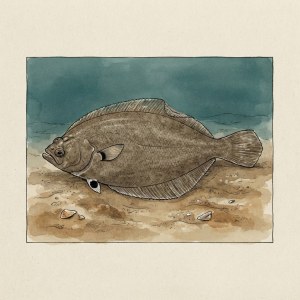
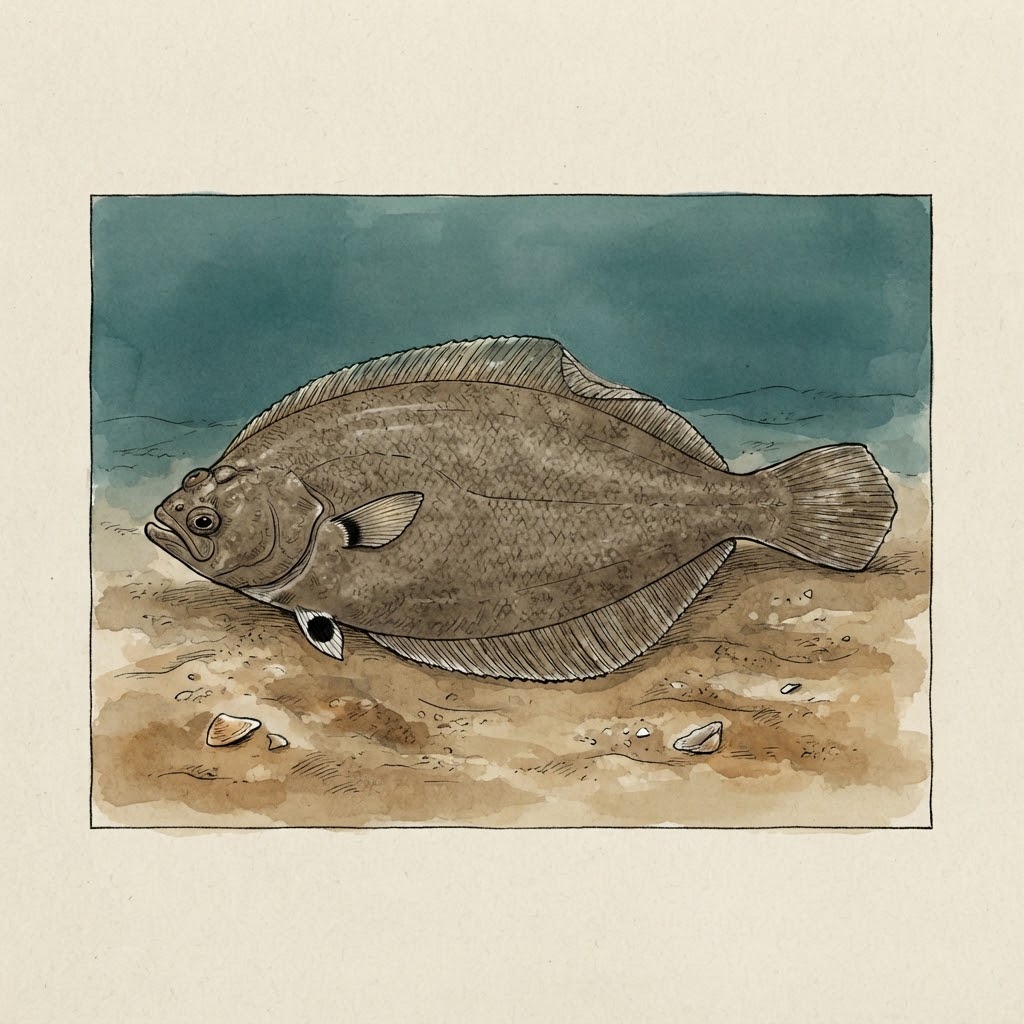
By day buried in the sand with only its eyes above the seabed. At night it goes hunting for worms and small shellfish. The sole is the king of North Sea flatfish, and for centuries the pride of the Belgian fishermen of Ostend and Zeebrugge.
| Habitat | Sandy and muddy seabeds, from shallow coastal waters to ±100 m deep |
| Length | Usually 25–40 cm, sometimes up to 60 cm |
| Active | Mainly at night |
Card I of IV
Ecological profile
| Identification | Elongated oval flatfish, brown with faint blotches; eyes on the right side; black spot on the tip of the pectoral fin; rounded head |
| Not to be confused with | The plaice, which is more diamond-shaped and has bright orange spots |
| Diet | Bristle worms, small shellfish and crustaceans |
Where can you find them?
| Belgium | Throughout the Belgian North Sea; young soles grow up in shallow coastal waters |
| Netherlands | Along the whole coast; the Wadden Sea and the Voordelta are important nurseries |
| Tip | At the fish auction and fish market in Ostend you can see fresh sole being landed |
Did you know a young sole swims upright like an ordinary fish? After a few weeks its left eye migrates over the head to the right side, and the little fish starts living on its side on the seabed.
Card II of IV
Behaviour & seasons
The sole lives a hidden life: by day it lies buried in the sand, at night it feels for food with sensitive little filaments on the underside of its head. In spring it spawns in shallower coastal waters. The larvae drift towards the coast, where the young soles grow up in shallow, warm bays and estuaries. In harsh winters the sole moves to deeper, warmer water.
| March – June | Spawning in shallower coastal waters |
| Summer | Young soles grow up along the coast |
| Autumn | Adult soles are at their best |
| Winter | Move to deeper, warmer water |
Card III of IV
From wild to plate
Sole is the most important fish for the Belgian sea fishery. The catch is bound by EU quotas and there is a minimum landing size, so young soles get the chance to reproduce. Preferably buy sole from a well-managed stock, for example with a sustainability label, and check the origin on the label. Fresh sole has clear eyes, a fresh sea smell and firm flesh that springs back when pressed. A sole of about 300 grams makes a fine portion for one person.
These are general seasonal and preparation guidelines, not official hunting seasons or a food safety guarantee. Check local regulations and reliable sources.
Card IV of IV
Recipe & tradition
Sole meunière
| Fish | Whole sole, skinned (dark skin removed), dusted in flour |
| Frying | In clarified butter, a few minutes per side until golden |
| Sauce | Fresh butter browned with lemon juice and parsley |
| To serve | Boiled new potatoes or chips, a wedge of lemon |
Meunière means ‘in the style of the miller’s wife’: the fish is simply dusted in flour and fried in butter. On the Belgian coast, sole cooked this way has been on the menu for generations, often with fresh chips. The dish became world-famous through the American food writer Julia Child, who ate her first sole meunière in Rouen in 1948 and wrote that the meal changed her life.
These are general seasonal and preparation guidelines, not official hunting seasons or a food safety guarantee. Check local regulations and reliable sources.
Frequently asked questions
Questions about the common sole
What is the difference between sole and plaice?
The sole is an elongated oval with a rounded head and a black spot on its pectoral fin. The plaice is more diamond-shaped and has bright orange spots.
When is sole at its best?
Sole is available all year, but is a little leaner just after spawning in spring. From summer into winter the flesh is usually at its best.
What is sole meunière?
A classic preparation in which the sole is dusted in flour, fried in butter and served with brown butter, lemon and parsley.
Habitat · Belgium