Mammal · Coast & North Sea
Phocoena phocoena
● IUCN: Least Concern · strictly protected
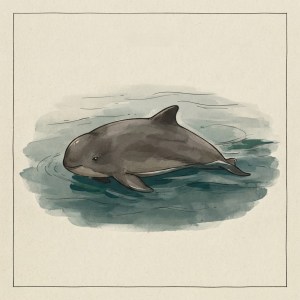
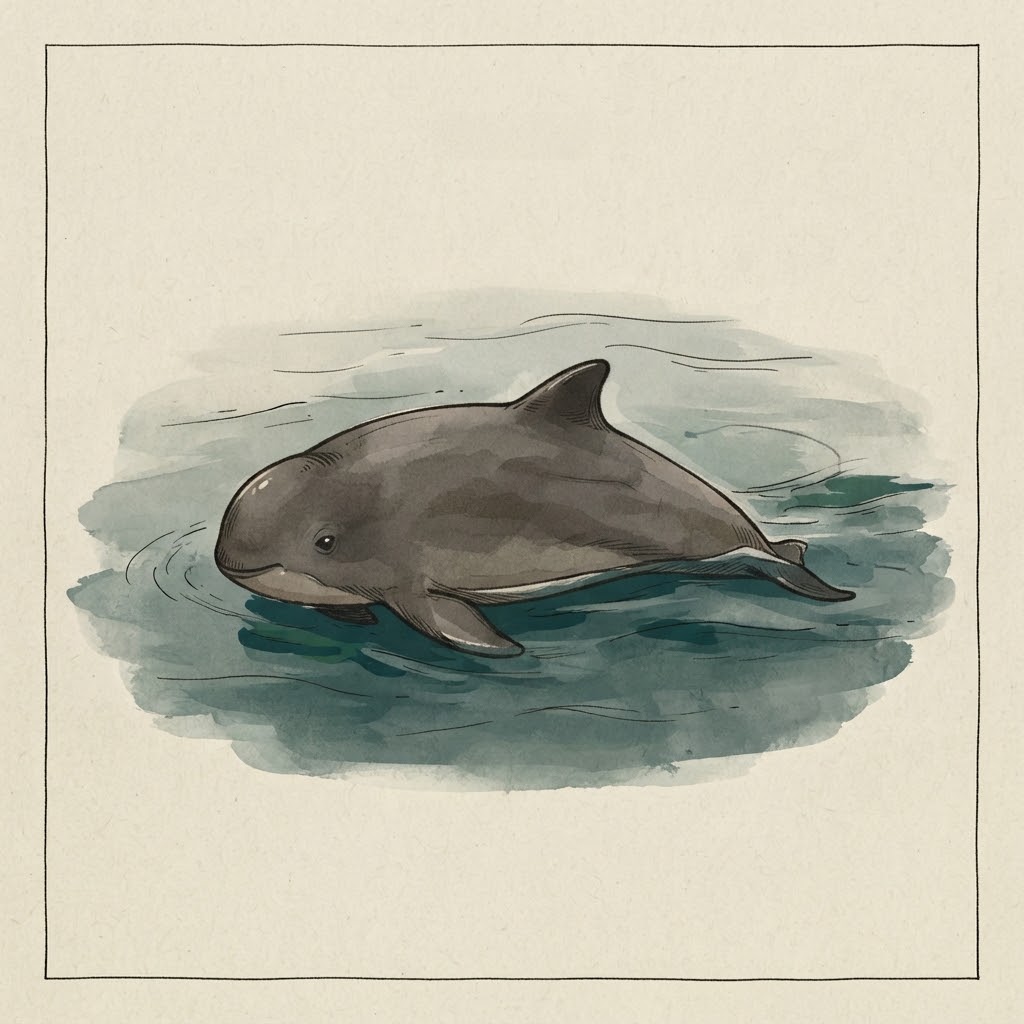
A small, triangular dorsal fin that briefly breaks the waves, a soft ‘pfff’ as it breathes, and it is gone again. The harbour porpoise is the smallest cetacean in the North Sea and also the most common. If you are patient, you can see it simply from the beach or a pier.
| Habitat | Shallow coastal seas, such as the entire North Sea |
| Length | 1.4–1.8 m |
| Weight | About 50–70 kg |
Card I of IV
Ecological profile
| Identification | Stocky, dark grey with a pale belly; rounded head without a beak; small, triangular dorsal fin in the middle of the back |
| Not to be confused with | Dolphins, which are larger, have a clear beak and a tall, curved dorsal fin |
| Diet | Small fish such as herring, whiting, sand eels and gobies |
Where can you find them?
| Belgium | Along the whole coast, especially from February to April, when many come close to shore |
| Netherlands | Along the whole North Sea coast and in the Eastern Scheldt, where they occur all year |
| Tip | Watch from a pier or high dune on a windless day with a flat sea, ideally with binoculars |
Porpoise on the beach? Do not touch the animal, keep dogs and people at a distance and report it immediately: in Belgium to the Royal Belgian Institute of Natural Sciences or the police, in the Netherlands to the national marine mammal reporting line or the police.
Card II of IV
Behaviour & seasons
Harbour porpoises live alone or in small groups, often a mother with her calf. Unlike dolphins they rarely leap out of the water: you usually only see a back and a fin roll briefly above the surface. Because they are small and lose heat quickly, they have to eat almost constantly, up to hundreds of small fish a day. They find their prey by echolocation: they send out clicks and listen for the echo.
| February – April | Many porpoises close to the Belgian coast |
| May – July | Calves are born after ±11 months’ gestation |
| Summer | Mating; calves suckle for almost a year |
| Autumn – winter | Spread across the North Sea in search of fish |
Card III of IV
Role in the ecosystem
As a hunter at the top of the food chain, the harbour porpoise shows how healthy the North Sea is. In the middle of the twentieth century it had almost disappeared from our coastal waters, partly because of pollution and a shortage of fish. It has returned since the 1990s. Yet the porpoise remains vulnerable: animals drown in set nets, and underwater noise from pile driving and shipping disrupts their echolocation.
What helps? Noise-reducing measures when building wind farms, such as bubble curtains, and fishing gear that causes less bycatch. And reports from the public: every sighting and stranding helps researchers.
Card IV of IV
Stories & culture
The harbour porpoise used to have many nicknames. Fishermen called it a ‘sea pig’, and you can still see that in other languages: the French marsouin and the English porpoise both come from words meaning ‘sea swine’. In English it is also known as the puffing pig, after the snorting sound it makes when it breathes at the surface. Its Dutch name, bruinvis (‘brown fish’), simply refers to its colour, even though it is strictly speaking not a fish but a mammal.
Frequently asked questions
Questions about the harbour porpoise
Can you see harbour porpoises from the Belgian coast?
Yes. Especially from February to April they often come close to shore. Watch from a pier or high dune on a windless day with a flat sea.
What is the difference between a porpoise and a dolphin?
The porpoise is smaller, has a rounded head without a beak and a small, triangular dorsal fin. Dolphins are larger, have a clear beak and a tall, curved dorsal fin.
What should I do if I find a porpoise on the beach?
Do not touch the animal, keep your distance and report it immediately to the relevant authority or the police. Dead animals are also valuable for research.
Habitat · Belgium