Bird · Alps
Lagopus muta
● IUCN: Least Concern · endangered in Germany
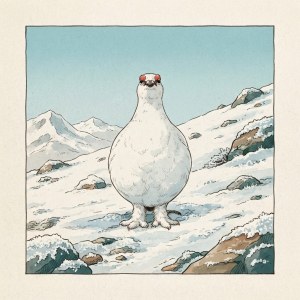
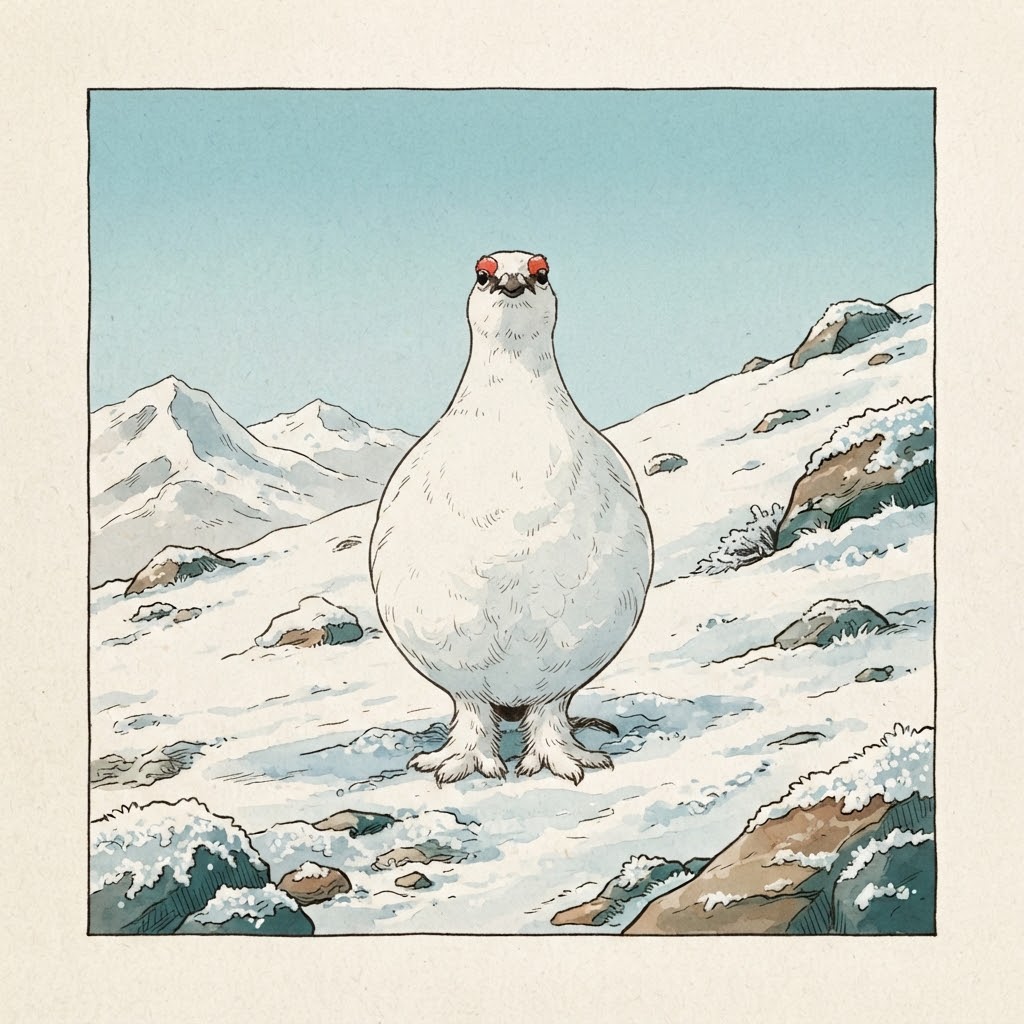
A relic of the Ice Age that changes its outfit with the seasons. In winter the rock ptarmigan is snow-white, in summer grey-brown like the rocks. In Germany it lives only high in the Bavarian Alps, above the tree line.
| Habitat | Rocky alpine meadows from about 1,600 to 2,500 metres altitude |
| Length | About 35 cm |
| Active | By day and at dusk |
Card I of IV
Ecological profile
| Identification | All white in winter apart from the black tail feathers; grey-brown in summer with white wings. The male has a red ‘eyebrow’ above the eye |
| Diet | Almost only plants: leaves, buds, seeds and berries |
| Adaptation | Feathered feet and, in winter, horny fringes along the toes, like natural snowshoes |
Where can you see them?
Difficulty: ●●●●● Difficult
Thanks to its camouflage you only notice it when it moves. Your best chance is on a summer mountain walk above the tree line.
| Bavarian Alps | Mainly the high limestone Alps, such as around Berchtesgaden |
| Elsewhere | Single birds in the Ammergau Alps and the Wetterstein range |
| Tip | Stay on the paths and watch for ‘stones’ that suddenly move |
Did you know the rock ptarmigan changes its feathers in small steps, so it never has bare patches and never gets cold?
Card II of IV
Behaviour & seasons
The rock ptarmigan does not migrate in winter. It stays high in the mountains, on windy slopes where the snow is blown away or melts early. To stay warm it sometimes burrows into the snow. Every time it is startled and flies off, it loses precious energy.
| May – early June | Courtship; the males call and fly up |
| Summer | Breeding and raising chicks; grey-brown plumage |
| Autumn | Moult into the white winter plumage |
| Winter | Snow-white; resting on windy ridges and snow-free spots |
When is the best time to see them?
| Jan | Feb | Mar | Apr | May | Jun | Jul | Aug | Sep | Oct | Nov | Dec |
| winter · let it rest | spring · courtship | summer · mountain walks | autumn · moult | winter | |||||||
■ Good chance ■ Fair chance ■ Difficult
Card III of IV
Role in the ecosystem
The rock ptarmigan is an indicator of the climate. As a cold-loving species from the Ice Age, it cannot climb any higher than the summit. As it gets warmer, its habitat shrinks. At the same time it is prey for golden eagles, foxes and stoats.
Give it peace: only 150 to 250 pairs breed in Germany, all in Bavaria. Ski tourers and snowshoers who leave the routes startle the birds, which costs them a lot of energy in winter. So stay on marked routes and respect wildlife quiet zones.
Card IV of IV
Stories & culture
An Ice Age traveller
During the last Ice Age the ptarmigan also lived in the lowlands of Central Europe. When the ice retreated, some moved to the far north and others into the mountains. That created two separate groups: the ptarmigans of the Arctic and those of the Alps. They are family, but they never meet again.
Frequently asked questions
Questions about the rock ptarmigan
Where does the rock ptarmigan live in Germany?
Only in the Bavarian Alps, above the tree line at about 1,600 to 2,500 metres.
Why does the rock ptarmigan turn white?
For camouflage. In winter the white barely shows against the snow; in summer the grey-brown matches the rocks.
How many rock ptarmigans live in Germany?
An estimated 150 to 250 breeding pairs, all in Bavaria.
How can you help the rock ptarmigan?
By staying on marked routes in winter and respecting wildlife quiet zones. Every time a bird is startled, it uses energy it badly needs.
Habitat · Germany