Mammal · Alps
Lepus timidus varronis
● IUCN: Least Concern · extremely rare in Germany
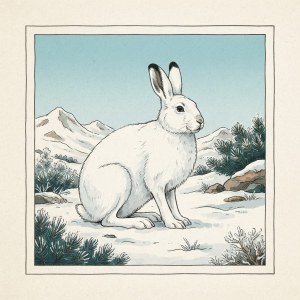
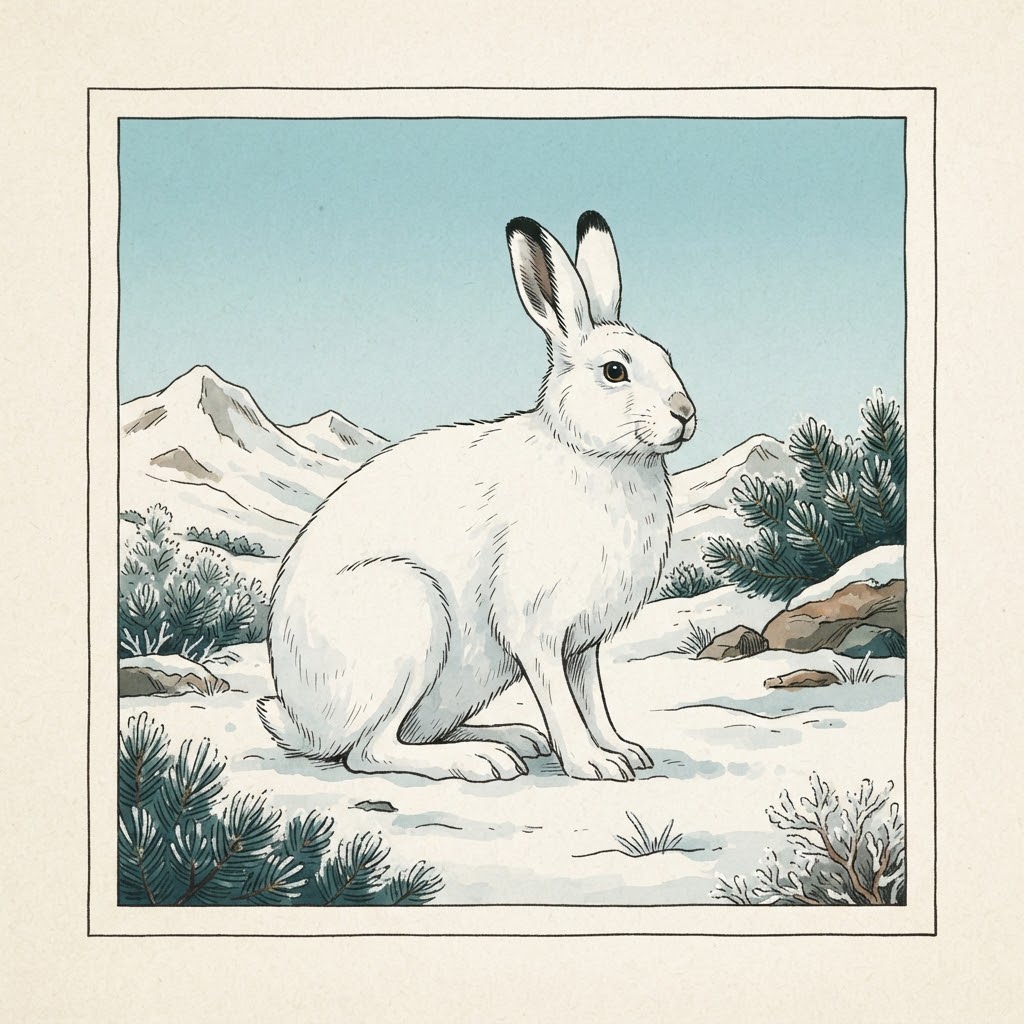
A hare that changes its outfit twice a year: brown in summer, snow-white in winter. The mountain hare is a relic of the Ice Age and in Germany lives only high in the Bavarian Alps. Yet its very disguise is sometimes fatal in a changing climate.
| Habitat | Mountain forests, dwarf shrubs and alpine meadows from about 1,300 metres |
| Size | About 60 cm long and 3 kg in weight |
| Active | Mainly at dusk and at night |
Card I of IV
Ecological profile
| Identification | White in winter with dark ear tips, grey-brown in summer. Shorter ears and a denser coat than the brown hare |
| Diet | Grasses, herbs, twigs, buds and bark |
| Adaptation | Large, very hairy feet with toes that spread: natural snowshoes |
Where can you see them?
Difficulty: ●●●●● Rare chance
It is shy, mostly active at night and rare. You see its tracks in the snow more often than the animal itself.
| Germany | Only the Bavarian Alps, from about 1,300 metres |
| Signs | Broad footprints in the snow, larger than those of the brown hare |
| Tip | Seen one? Report your sighting; little is known about how many mountain hares live in Germany |
Did you know the change of coat is driven by day length, not by snow? That is why the hare turns white in autumn even when no snow has fallen yet.
Card II of IV
Behaviour & seasons
By day the mountain hare lies hidden in a hollow between shrubs or rocks, and only at dusk does it go looking for food. In winter it saves as much energy as it can. Anyone who startles it costs it strength it badly needs.
| Spring | Coat change from white to brown; mating season |
| Summer | Young are born; grey-brown coat |
| Autumn | Coat change to white, usually complete by mid-November |
| Winter | White and well camouflaged, provided there is snow |
When is the best time to see them?
| Jan | Feb | Mar | Apr | May | Jun | Jul | Aug | Sep | Oct | Nov | Dec |
| winter · tracks in the snow | spring · coat change | summer · brown | autumn · coat change | winter | |||||||
■ Good chance ■ Fair chance ■ Difficult
Card III of IV
Role in the ecosystem
The mountain hare is important prey for golden eagles, foxes and other predators in the high mountains. Its white coat is its best protection, but only when there is snow. Because snow in the Alps falls later and melts earlier, the hare increasingly sits like a bright white dot in a brown landscape. That makes it stand out instead.
Three threats: the climate; the brown hare, which is moving ever higher into the mountains as it warms and can even interbreed with the mountain hare; and disturbance from winter sports. So stay on the routes in winter and give it quiet zones.
Card IV of IV
Stories & culture
Wanted: the mountain hare
In 2025 the mountain hare was chosen as Germany’s Tier des Jahres (Animal of the Year), beating the marmot and the ibex. Because almost nobody knows how many are left, the German Wildlife Foundation made real ‘wanted posters’ with its portrait. Mountain walkers, foresters, innkeepers and hunters were asked to report their sightings. That way everyone who goes into the mountains helps with research.
Frequently asked questions
Questions about the mountain hare
What is the difference between a mountain hare and a brown hare?
The mountain hare has shorter ears, a denser coat and larger feet, and turns white in winter. The brown hare stays brown all year.
Where does the mountain hare live in Germany?
Only in the Bavarian Alps, from about 1,300 metres altitude.
Why does the climate threaten the mountain hare?
Its coat turns white according to day length. If snow falls later or melts earlier, it sits white in a brown landscape and is easy for predators to spot.
How old does a mountain hare get?
Up to about eight years.
Habitat · Germany