Mammal · Alps & Pyrenees
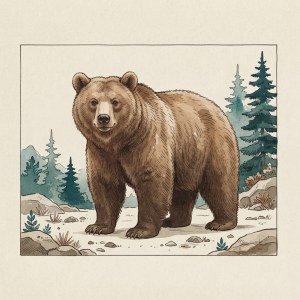
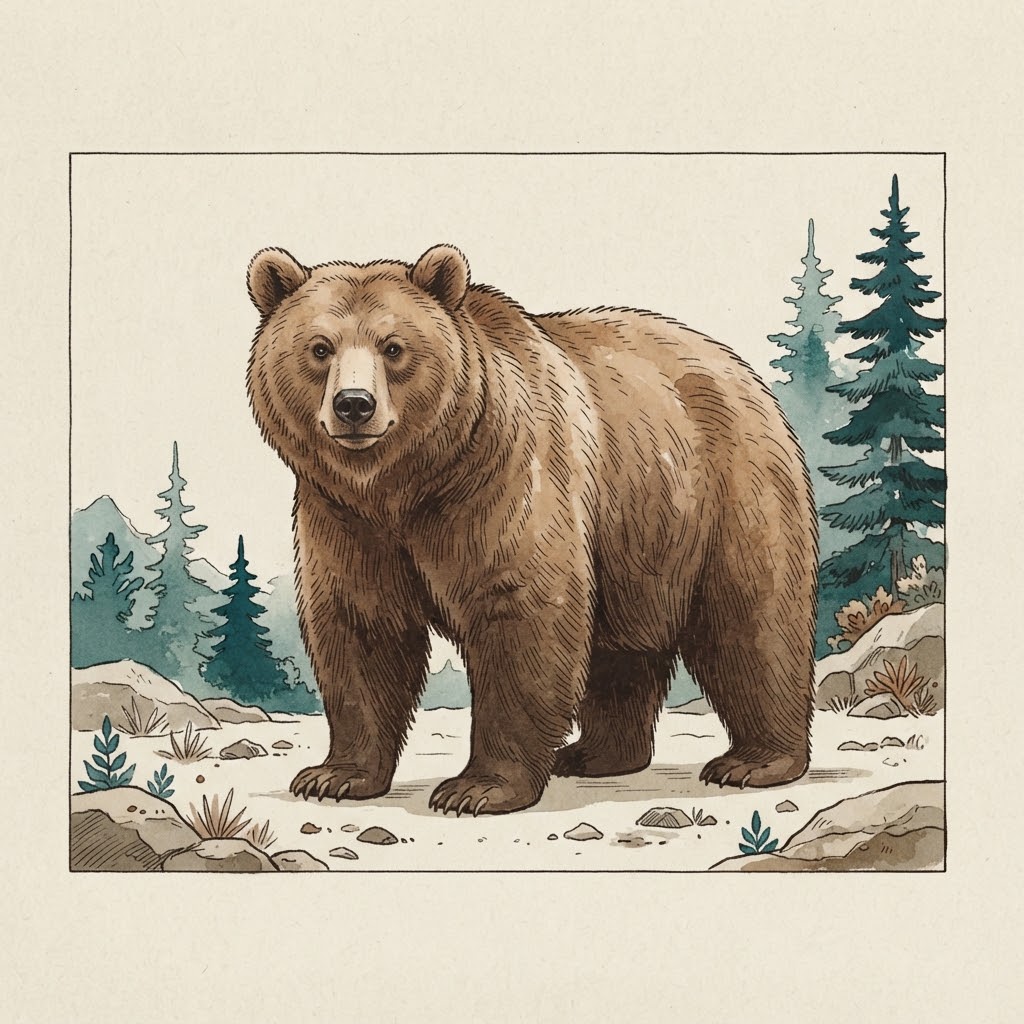
Ursus arctos
● Critically endangered in France · strictly protected
Europe’s largest predator lives in the Pyrenees again. Thirty years after the first reintroduction, researchers counted at least 108 bears in 2025, spread across the whole mountain range. A success, but also an animal that stirs strong feelings in the mountain villages.
| Habitat | Mountain forests, rocky slopes and alpine meadows in the Pyrenees |
| Weight | Males usually 150–250 kg, females lighter |
| Active | Mainly at dusk and at night; winter rest from December to March |
Card I of IV
Ecological profile
| Identification | Large, heavily built animal with a hump between the shoulders, round ears and a coat from light brown to almost black |
| Diet | Mostly plants: grasses, berries, nuts and roots; also insects, carrion and sometimes livestock |
| Signs | Broad paw prints with five toes and long claws, scratch marks on trees |
Where can you find them?
Difficulty: ●●●●● Rare chance
Bears are shy and avoid people. Most hikers see only signs at best.
| Core area | The central Pyrenees, especially the Ariège and the Haute-Garonne |
| Also | The western Pyrenees in the Béarn |
| Tip | Visit a visitor centre or go out with a guide who can show you the signs |
Meeting a bear? Stay calm and don’t run. Let it know you’re there by talking calmly, and back away slowly. Never approach a bear, especially not a mother with cubs. Keep your dog on a lead, and give a wide berth to flocks guarded by large white sheepdogs.
Card II of IV
Behaviour & seasons
Bears live alone, except for mothers with cubs. In winter they withdraw into a den for their winter rest. That is also where the cubs are born, tiny and blind. In spring they come out, looking for the first green shoots and for animals that did not survive the winter. In autumn they fatten up on beechnuts, acorns and berries.
| December – March | Winter rest in a den; cubs are born |
| April – May | Out of the den, looking for the first green shoots |
| May – July | Mating season |
| Autumn | Fattening up on nuts, acorns and berries |
When is the best time to see them?
| Jan | Feb | Mar | Apr | May | Jun | Jul | Aug | Sep | Oct | Nov | Dec |
| winter rest | active, but shy and rarely seen | rest | |||||||||
■ Good chance ■ Fair chance ■ Difficult
Card III of IV
Bears and people
The bear’s return divides the Pyrenees. Conservation groups see it as a symbol of wild mountains. Many shepherds mainly see the damage: in 2025, 289 attacks on livestock were attributed to bears. That number is falling slightly, even as the bear population grows. The French state pays compensation and supports protection measures, such as shepherds with the flocks, night enclosures and large guard dogs.
Growing, but vulnerable: over the past ten years the population grew by an average of 11 percent a year. Because all the bears descend from a small number of animals, genetic diversity is low and inbreeding is increasing. Conservation groups are therefore calling for new bears to be released; no decision has been taken yet.
Card IV of IV
Stories & culture
Thirty years of bears from Slovenia
By the 1990s the original Pyrenean bears had almost disappeared. In 1996 the first bears from Slovenia were released in the central Pyrenees, and more followed in the years after. Almost all of today’s bears descend from those Slovenian animals. In 2026 it is thirty years since then. In the mountain villages the bear also lives on in old traditions, such as the bear festivals of the Vallespir, where villagers dress up as bears in February.
Frequently asked questions
Questions about the brown bear
How many bears live in the Pyrenees?
In 2025 at least 108 different bears were recorded, spread across the whole mountain range, on both the French and Spanish sides.
Is hiking in the Pyrenees dangerous because of bears?
The risk is small. Bears avoid people. If you do see one, stay calm, don’t run and back away slowly. Never approach a mother with cubs.
Where do the Pyrenean bears come from?
Almost all of them descend from bears released from Slovenia since 1996.
Are there bears in the French Alps?
No, in France brown bears live only in the Pyrenees.
Habitat · France