Mammal · Dehesa & farmland
Oryctolagus cuniculus
● IUCN: endangered in its homeland · eat farmed
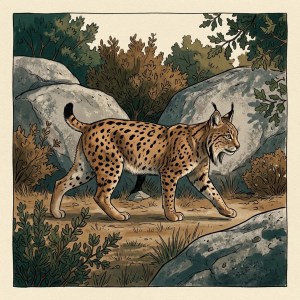
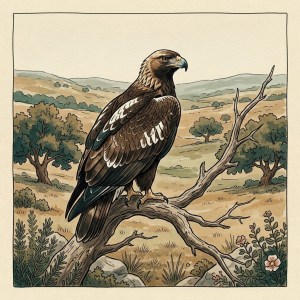
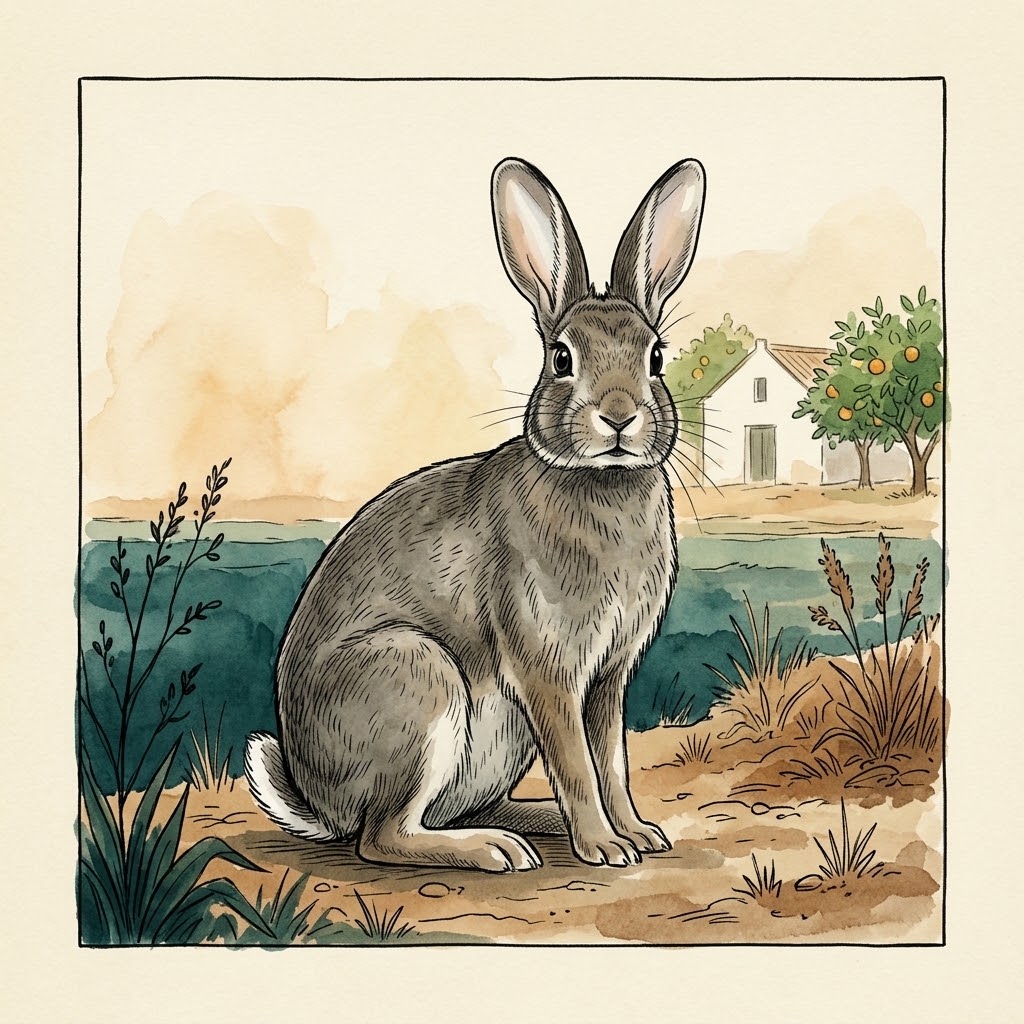
In much of Europe a common garden visitor, in Spain a keystone species and an endangered one. The rabbit originally comes from the Iberian Peninsula and only later spread around the world. Without rabbits there would be no Iberian lynx, no imperial eagle, and no real paella valenciana.
| Habitat | Dehesa, field margins, scrub and sandy soils that are easy to dig |
| Size | 35–45 cm; Iberian rabbits are small, around 1–1.5 kg |
| Active | Mostly at dusk and at night |
Card I of IV
Ecological passport
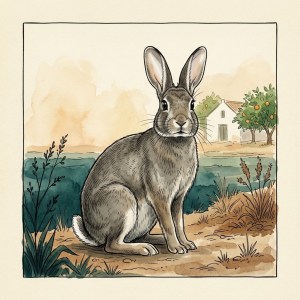
| Identification | Grey-brown fur, white underside to the tail and ears without black tips |
| Don’t confuse with | The Iberian hare, which is larger, has longer legs and black-tipped ears; it does not dig burrows |
| Diet | Grasses, herbs, young shoots, roots and bark |
Where can you see them?
Difficulty: ●●●●● Fairly easy
At dusk you often see them grazing along woodland edges and country lanes.
| Valencia | Albufera Natural Park, at the edges of the rice fields and the Devesa dunes |
| Also good | Doñana, Monfragüe and the dehesas of the Sierra de Andújar |
| Tip | Where there are lots of rabbits, your chances of lynx and imperial eagle are higher too |
Did you know more than forty Spanish and Portuguese animal species eat rabbits? From lynx and eagle to fox and eagle owl, the rabbit is the staple food of Iberian nature.
Card II of IV
Behaviour & season
Rabbits live in groups in a system of burrows, the warren. By day they often stay underground; at dusk they come out to graze. When danger threatens they thump the ground with their hind legs and flash their white tail as a warning. In Spain they breed mainly in the wet half of the year, from autumn to spring, when there is most green food.
| Autumn – winter | The breeding season starts after the first rain |
| March – May | Lots of young rabbits; best time to watch |
| Summer | Drought and heat; little food and mainly active at night |
| All year | Risk of diseases such as myxomatosis and RHD |
When is the best time to see them?
| Jan | Feb | Mar | Apr | May | Jun | Jul | Aug | Sep | Oct | Nov | Dec |
| winter | young rabbits · best time | heat · dusk only | autumn | ||||||||
■ Good chance ■ Fair chance ■ Difficult
Card III of IV
From field to plate
Rabbit is an everyday meat in Spain: you find it at every butcher and on the menu of village restaurants, often stewed or with rice. Spain is one of Europe’s largest producers of rabbit meat, and almost all of it comes from farmed rabbits. That is just as well: the wild rabbits are badly needed by the lynx, the imperial eagle and dozens of other animals.
Rabbit meat is lean and mild and goes well with garlic, rosemary and thyme, the herbs that grow in Spanish scrubland.
Seasons and preparation vary by region and year. Ask your poulterer what is fresh right now.
Card IV of IV
Recipe & tradition
Paella valenciana
| Meat | Rabbit and chicken in pieces, browned in olive oil |
| Vegetables | Flat green beans (ferraúra), large white beans (garrofó) and grated tomato |
| Rice & flavour | Round rice from the Albufera, water, saffron, paprika and a sprig of rosemary |
| Method | In a wide, flat paella pan; don’t stir once the rice is in. The crispy bottom is called socarrat |
The real paella comes from the rice fields around the Albufera of Valencia, and contains no seafood but rabbit and chicken. Farmers cooked it over a wood fire with whatever the land provided. According to a well-known theory, Spain even owes its name to the rabbit: Phoenician sailors are said to have called the land i-shepan-im, land of the hyraxes, because they mistook the rabbits for those animals. That supposedly became Hispania.
Frequently asked questions
Questions about the rabbit in Spain
Is the rabbit really endangered?
In its native range, Spain and Portugal, yes. Since 2018 it has been listed as endangered there on the IUCN Red List, mainly because of viral diseases. Elsewhere in the world it is often a pest.
Is there rabbit in paella?
In the traditional paella valenciana, yes: rabbit and chicken, with beans, tomato, saffron and rosemary. Seafood paella is a later variant.
What is the difference between a rabbit and a hare?
A hare is larger, has longer legs and black-tipped ears, and does not dig burrows. Rabbits live in groups in a warren.
Habitat · Spain