Fish · Atlantic coast
Merluccius merluccius
● IUCN: Least Concern · check origin and catch method
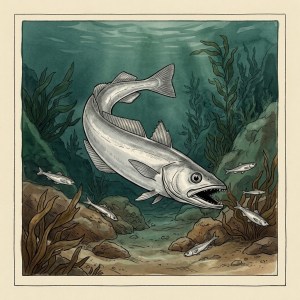
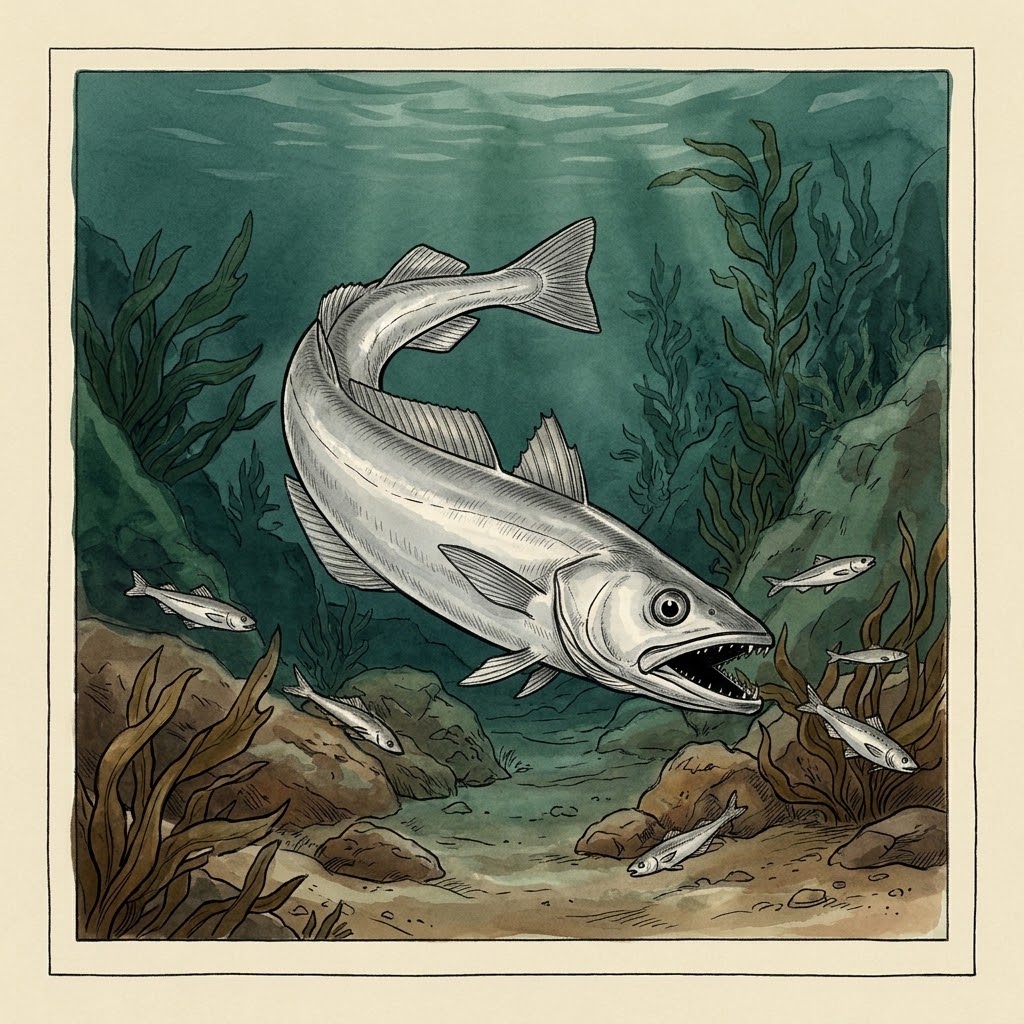
No fish is eaten more in Spain than the merluza. The hake is a slender hunter of deep water, with a big mouth full of sharp teeth. By day it stays near the seabed; at night it rises to hunt. At the market you recognise the best by the label de pincho: caught on a line.
| Habitat | Continental shelf and slope, usually between 70 and 400 metres deep |
| Size | Usually 30–60 cm, sometimes over a metre |
| Active | Mainly at night, when it rises to hunt |
Card I of IV
Ecological passport
| Identification | Long and slender, grey with a silver belly, two dorsal fins, a large mouth with sharp teeth and a black lining inside the mouth |
| Do not confuse with | The cod, which has a barbel under the chin and three dorsal fins |
| Diet | Fish, especially blue whiting, sardine and anchovy, and squid |
Where can you find them?
Difficulty: ●●●●● Almost impossible in the wild
The hake lives too deep to be seen. Go to the fish auction or market instead, where it comes in every morning.
| Galicia | Burela, one of Europe’s main hake ports, and the fish market of A Coruña |
| Basque Country | Pasaia and Ondarroa, and La Bretxa market in San Sebastián |
| Tip | Ask for merluza de pincho: line-caught, with each fish handled individually |
Did you know Spain is one of the biggest hake-eating countries in the world? A large share of the hake eaten there comes from far outside Europe.
Card II of IV
Behaviour
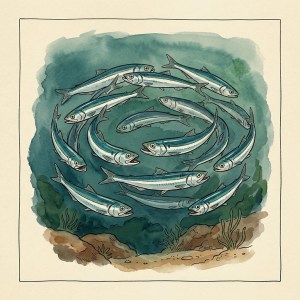
The hake leads a double life. By day it hovers just above the muddy seabed; at dusk it rises into the middle of the water column to hunt schools of small fish. Young hake grow up in shallower nursery areas on the shelf, including off the coast of Galicia and in the Bay of Biscay. Large hake are cannibals: they also eat younger members of their own species.
| Spring | Main spawning season in the Atlantic |
| Summer | Young hake in the nursery areas on the shelf |
| Autumn | Move to deeper water |
| Winter | On the shelf slope; fewer fishing days because of storms |
When can you find it fresh?
| Jan | Feb | Mar | Apr | May | Jun | Jul | Aug | Sep | Oct | Nov | Dec |
| storms | plenty at the auction | variable | |||||||||
■ Good chance ■ Fair chance ■ Hard
Card III of IV
From sea to plate
Hake in European waters was heavily overfished for a long time. With recovery plans and quotas, the northern stock, from the Bay of Biscay to the North Sea, has recovered strongly. The southern stock off Galicia and Portugal had a harder time, but has been improving in recent years. That is why it pays to check the label for where and how the fish was caught.
The flesh is white, soft and mild, with few bones. In Spain hake is eaten baked, in green sauce, pan-fried as a rodaja (steak) or battered as merluza a la romana.
Seasons and preparation vary by region and by year. Ask your fishmonger what is fresh right now.
Card IV of IV
Recipe & tradition
Merluza en salsa verde
| Fish | 4 hake steaks and a handful of clams |
| Sauce | Soften garlic in olive oil, add a spoonful of flour, then fish stock and a splash of white wine |
| Cook | Lay the hake in the sauce and gently shake the pan back and forth so the sauce binds; add the clams until they open |
| Finish | Plenty of chopped parsley; eat with bread to mop up the sauce |
Green sauce is a Basque classic. Shaking the pan is the trick: the gelatine from the fish makes the sauce creamy by itself. The Basque Country is also famous for kokotxas, the soft piece under the hake’s gills, cooked the same way or in a pil-pil sauce. Fishermen once gave this piece away; now it is a delicacy you find in good restaurants in San Sebastián and Bilbao.
Frequently asked questions
Questions about the hake
What does merluza de pincho mean?
That the hake was caught on a line rather than in a net. The fish is less damaged and the catch is more selective.
What are kokotxas?
The soft, gelatinous piece of flesh under the hake’s head. In the Basque Country it is a prized delicacy.
Can you see hake in the wild?
Hardly, because it lives hundreds of metres deep. The fish market or auction is the best place to see one.
Habitat · Spain