Fish · Mediterranean
Sardina pilchardus
● IUCN: Least Concern · Mediterranean stock under pressure
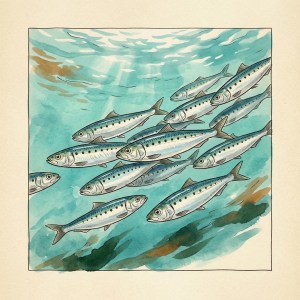
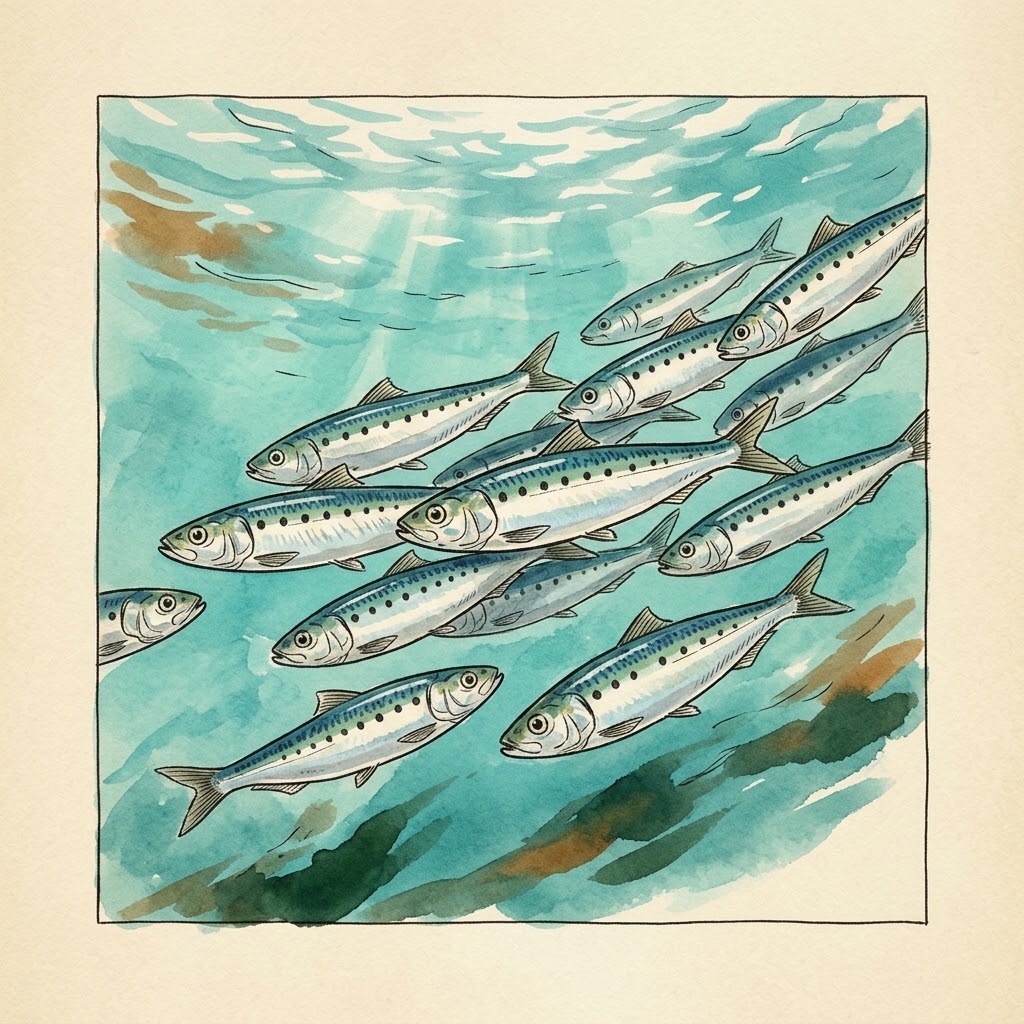
On a summer evening in Málaga you smell them from far away: sardines on a skewer, slanted over a fire of olive wood in a little boat full of sand on the beach. The sardine is a small fish that swims in huge schools along the whole Spanish coast, and one of the most important links in the life of the sea.
| Habitat | Coastal water and open sea, in large schools, mostly in the upper 100 metres |
| Size | Usually 15–20 cm, up to about 25 cm |
| Active | Day and night; closer to the surface at night |
Card I of IV
Ecological passport
| Identification | Streamlined, blue-green back and silver flanks, often with a row of dark spots behind the gill; large scales that come off easily |
| Do not confuse with | The anchovy, which is slimmer and has a much larger mouth reaching behind the eye |
| Diet | Plankton: tiny crustaceans, fish eggs and algae |
Where can you find them?
Difficulty: ●●●●● Moderate
With a snorkel you may see a school flash past the rocks in summer. At the fish market they are almost always there.
| Andalusia | The beaches of Málaga, such as Pedregalejo and El Palo, with their chiringuitos and espetos |
| Mediterranean | The fish markets of Almería, Alicante and Barcelona |
| Tip | Snorkel early in the morning in a rocky cove, when the water is still calm and clear |
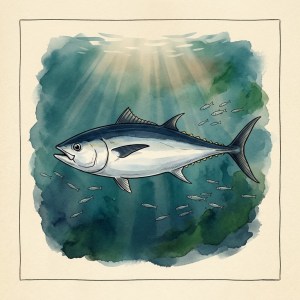
Did you know the sardine feeds almost everything in the sea? Dolphins, tuna, seabirds and larger fish depend heavily on sardines and anchovies.
Card II of IV
Behaviour
Sardines spend their whole lives in schools. They filter plankton from the water by swimming with their mouths open. They spawn in the cooler months, and in spring and summer, when plankton is plentiful, they fatten up. That is why sardines taste best in summer. In Spain people say you should eat them in the months without an ‘r’ in their Spanish name: May to August.
| Winter | Spawning season; the fish are lean |
| Spring | Plenty of plankton; schools fatten up |
| Summer | At their fattest and tastiest; espeto season |
| Autumn | Still good, but getting leaner |
When is the best time to see them?
| Jan | Feb | Mar | Apr | May | Jun | Jul | Aug | Sep | Oct | Nov | Dec |
| spawning · lean | espeto season | late summer | winter | ||||||||
■ Good chance ■ Fair chance ■ Hard
Card III of IV
From sea to plate
The sardine is one of the most-caught fish in Spain. In the Mediterranean the stock is under pressure from fishing and from warmer water, which changes the plankton. Along the Atlantic coast of Spain and Portugal the stock dropped sharply around 2010 and is recovering under stricter rules. A local sardine, in season, is the best choice.
Sardines are oily, firm and full of flavour. They are best kept simple: grilled with coarse salt, fried or marinated in vinegar.
Seasons and preparation vary by region and by year. Ask your fishmonger what is fresh right now.
Card IV of IV
Recipe & tradition
Sardines as espeto
| Fish | Fresh whole sardines, not gutted and not scaled |
| Skewer | Five or six sardines threaded through the side on a cane or wooden skewer, belly down |
| Grill | Slanted next to a wood fire, not over it; turn after a few minutes |
| Serve with | Just coarse salt and a wedge of lemon; eat them with your hands |
The espeto is the symbol of Málaga. The espetero threads the sardines on a skewer and sets them at an angle in the sand next to a fire of olive wood, often in an old fishing boat filled with sand. The skill lies in the distance to the fire and the wind. On the other side of Spain, in Galicia, sardines belong to the night of San Juan on 23 June: bonfires burn on the beaches and sardines are grilled everywhere.
Frequently asked questions
Questions about the sardine
What is an espeto?
Sardines on a skewer, grilled next to a wood fire on the beach. It is Málaga’s best-known dish.
When do sardines taste best?
In summer, from about May to September. That is when they are fattest.
Why are sardines eaten on San Juan?
The night of San Juan falls at the end of June, in the middle of sardine season. In Galicia especially, beach bonfires and grilled sardines are part of the celebration.
Habitat · Spain