Mammal · Mountains
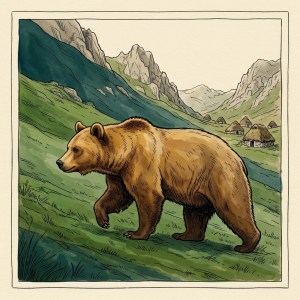
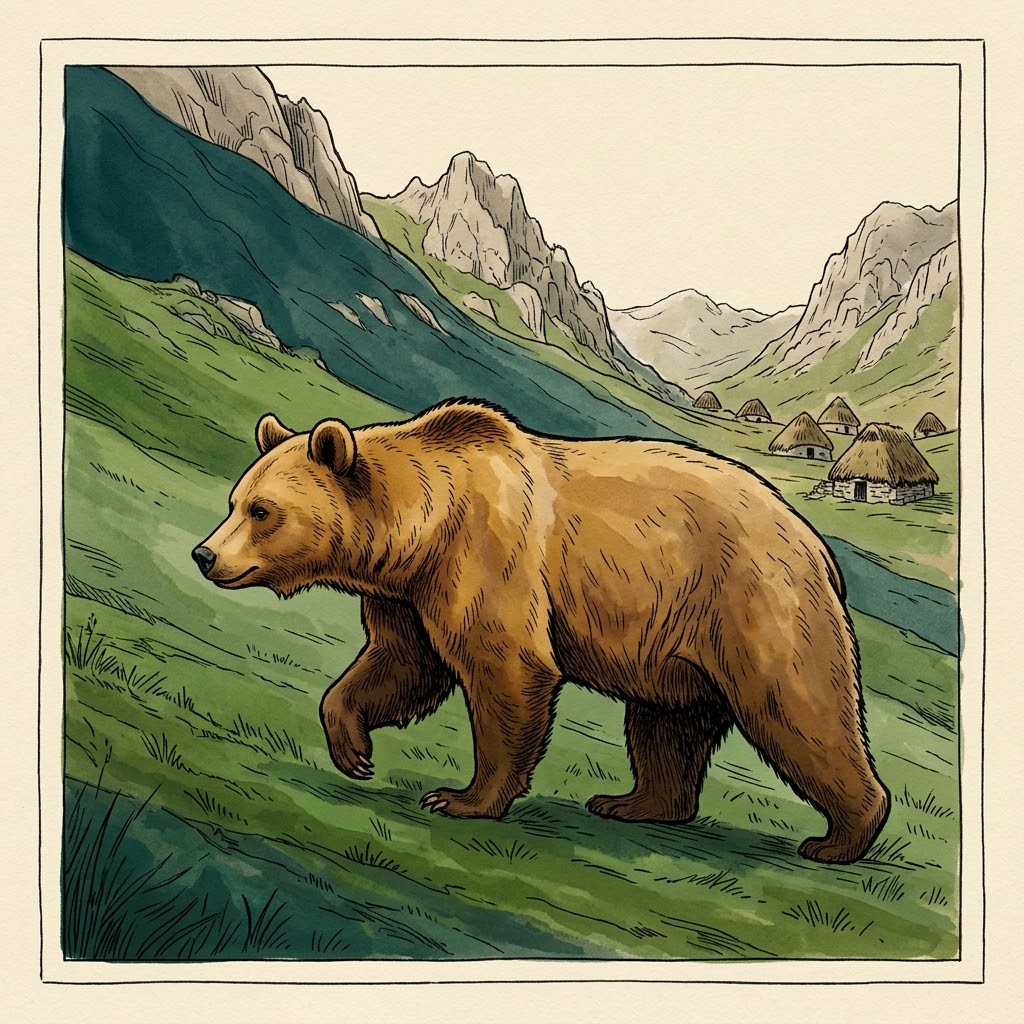
Ursus arctos
● Endangered in Spain · strictly protected
Thirty years ago only around a hundred bears lived in the Cantabrian Mountains, split into two isolated groups. Today there are around 370. That makes Asturias one of the best places in Western Europe to see a wild brown bear, from a viewpoint high above the valleys.
| Habitat | Steep wooded mountain slopes with beech, oak and open meadows |
| Weight | Males usually 100–200 kg, females 70–120 kg; smaller than northern European bears |
| Active | Mostly early morning and at dusk |
Card I of IV
Ecological passport
| Identification | Brown to golden-brown, with a shoulder hump and round ears; the Cantabrian bear is smaller and lighter built than bears from Scandinavia or Russia |
| Diet | Mostly plants: grass, cherries, bilberries, hazelnuts, beechnuts and acorns; also ants, carrion and sometimes livestock or beehives |
| Signs | Broad five-toed footprints, dug-up anthills and claw marks on trees |
Where can you see them?
Difficulty: ●●●●● Hard
From a good viewpoint, with a telescope and patience, you have a fair chance in spring and autumn of seeing a bear on the opposite slopes.
| Asturias | Somiedo Natural Park, around Pola de Somiedo, the Valle del Lago and the Saliencia valley |
| Also good | Proaza and Teverga along the Senda del Oso, and Fuentes del Narcea |
| Tip | Watch from the road or a viewpoint; never approach a bear and stay on the paths |
Did you know bears in the mild Cantabrian climate sometimes barely hibernate? Especially males can occasionally be seen out and about even in January during soft winters.
Card II of IV
Behaviour & season
Bears live alone, except mothers with cubs, which stay with their mother for a year and a half. In winter they rest in a den among rocks, where the cubs are also born. In spring they graze the open meadows and look for a mate. In summer they eat cherries and berries, and in autumn they gorge on hazelnuts, beechnuts and acorns to build up fat for the winter.
| December – March | Winter rest; cubs born in the den |
| April – June | Grazing on open slopes; mating season |
| July – August | Cherries and berries, often in denser forest |
| September – November | Fattening up on nuts and acorns |
When is the best time to see them?
| Jan | Feb | Mar | Apr | May | Jun | Jul | Aug | Sep | Oct | Nov | Dec |
| winter rest | spring · good time | summer | autumn · good time | to the den | |||||||
■ Good chance ■ Fair chance ■ Difficult
Card III of IV
Role in the ecosystem
The bear is a gardener of the forest. It eats huge amounts of fruit and spreads the seeds in its droppings, often kilometres away. By tearing open anthills and rotting logs it makes food available to smaller animals. And what it leaves of a carcass benefits vultures, foxes and beetles.
Two groups become one: for a long time the bears in the west and east of the range were cut off from each other. Now that numbers are growing, bears are moving between the two areas again. That is good news for the genetic health of the population.
Card IV of IV
Stories & culture
The bear and the strawberry tree
Madrid’s coat of arms shows a bear eating from a strawberry tree, el oso y el madroño, and its statue on the Puerta del Sol is a well-known meeting point. In Somiedo, bears live alongside centuries-old brañas: summer pastures with stone herders’ huts roofed with thatch or broom, the teitos. There farmers, bears and nature tourists now meet, after centuries in which the bear was mainly seen as an enemy.
Frequently asked questions
Questions about the brown bear in Spain
How many bears live in the Cantabrian Mountains?
According to the latest national census around 370, spread across Asturias, León, Cantabria, Palencia and Galicia.
Where can you see bears in Spain?
Best in Somiedo Natural Park in Asturias, from viewpoints above the valleys. They are also regularly seen around Proaza, Teverga and Fuentes del Narcea.
Is it dangerous to hike in bear country?
The risk is very small. Bears avoid people. Stay calm if you see one, back away slowly and never approach a mother with cubs.
Going bear watching? Read our guide seeing brown bears in Asturias, with the best spots in Somiedo and how to watch without disturbing.